Many rental businesses start with barcode scanning because it is simple, reliable, and inexpensive. As operations grow, however, inventory becomes harder to track. Large return loads, warehouse searches, and time-consuming inventory checks can slow teams down. At that point, many operators begin comparing RFID vs barcode systems.

Both technologies track equipment effectively, but they work very differently in practice. Understanding how each system performs in real rental warehouse workflows can help you choose the approach that best supports your operation as it scales.

RFID vs barcodes

How Barcode Inventory Systems Work in Rental Warehouses

Most rental operators are already familiar with barcode tracking. Many warehouses use barcode labels on tools, equipment, or rental items because the system is straightforward and affordable to implement.

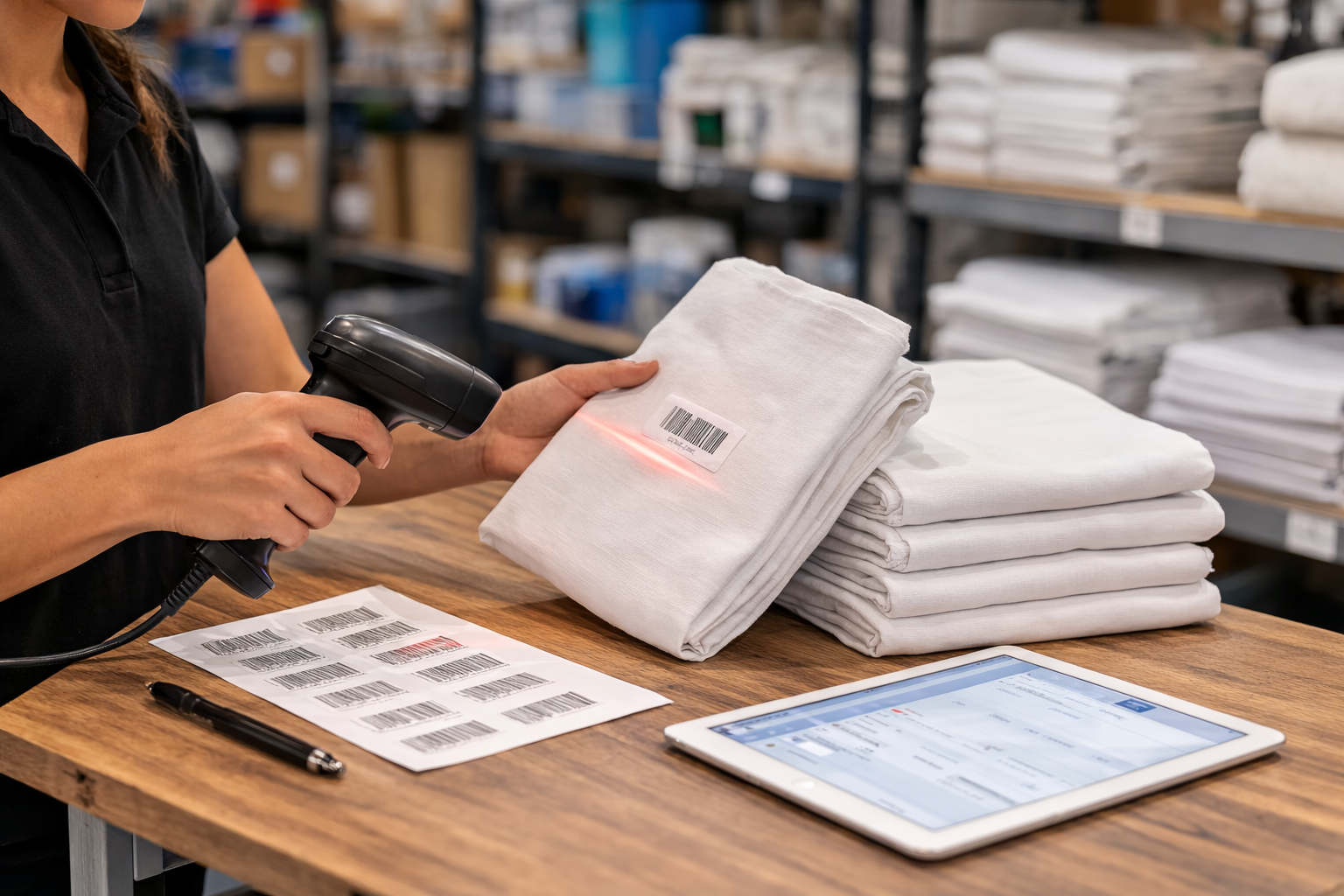
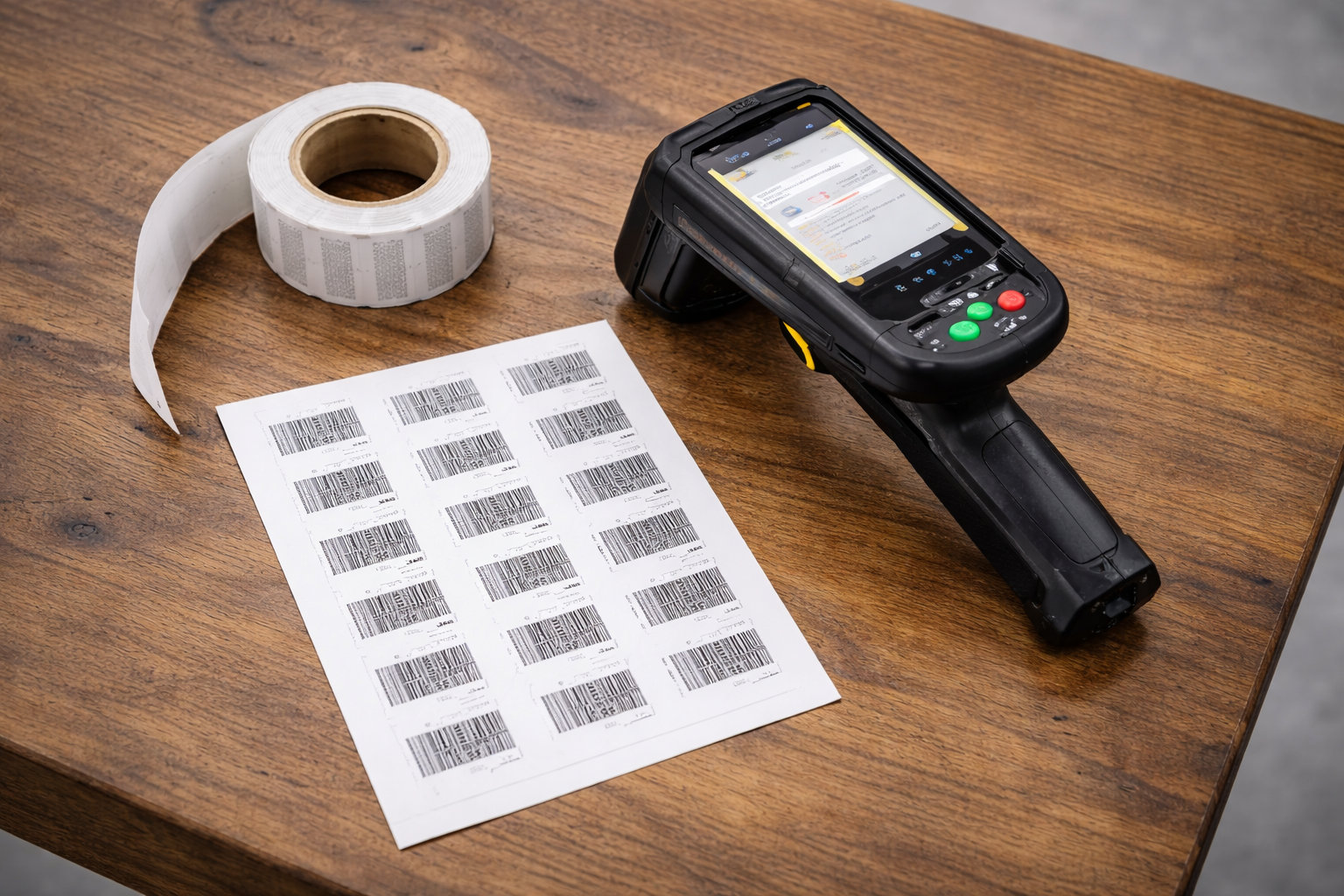
In a barcode system, each item is labeled with a printed code that can be scanned with a handheld device. When staff scan the code, the system records the item’s identifier and updates its status in the inventory software. During daily operations, warehouse teams typically scan items as they are loaded onto trucks, returned from jobs, or verified during inventory checks.

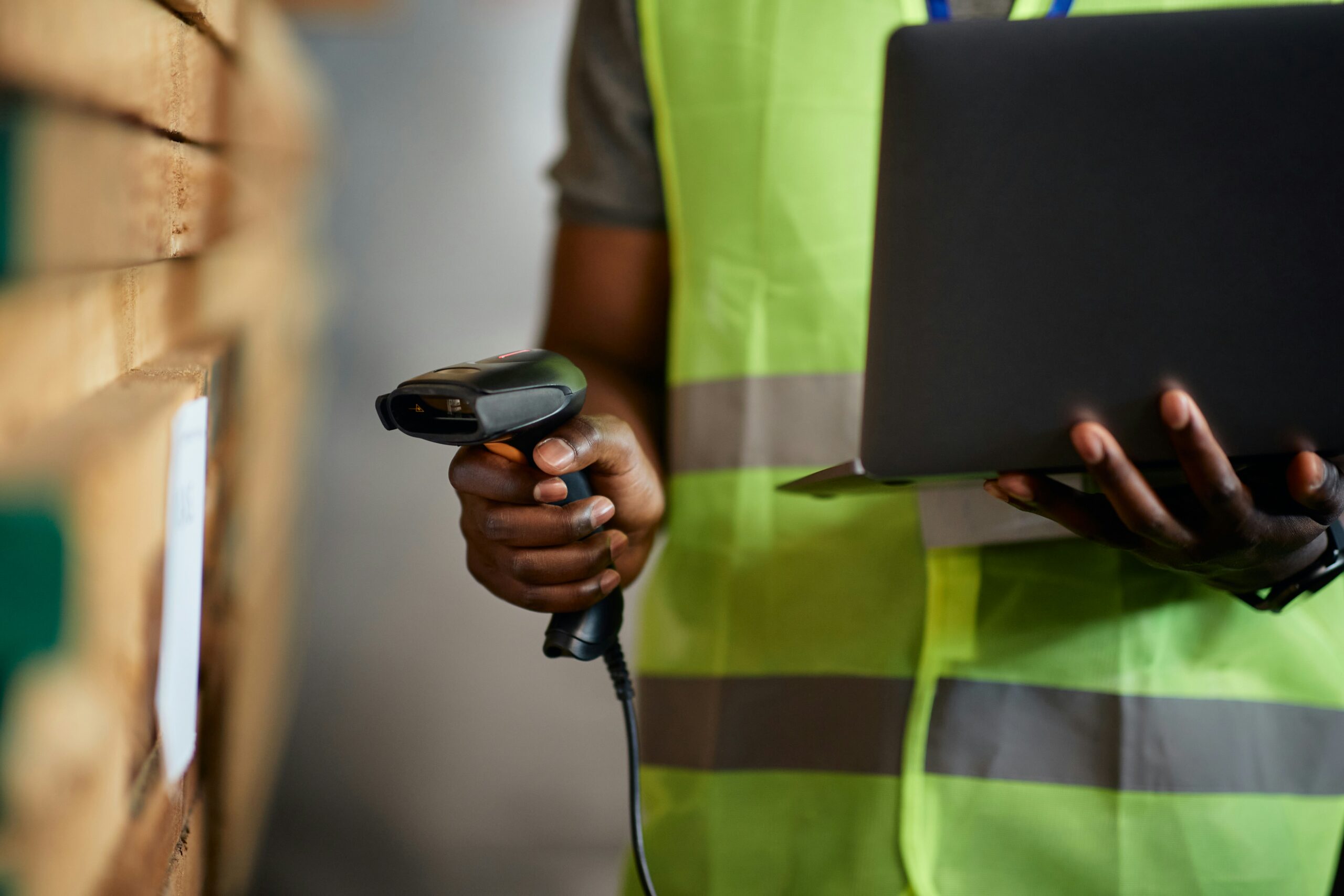
Barcode systems require line-of-sight scanning, meaning the scanner must be able to see the label clearly. Each item also needs to be scanned individually. For many rental businesses, this works well. A technician loading a generator, for example, can quickly scan the barcode before placing it on the truck. When the item returns, the barcode is scanned again to record the check-in.

As inventory volume grows, however, the process can become slower. Warehouses with large quantities of small items, such as linens, accessories, or high-turnover equipment, may find that scanning items one at a time takes longer than expected.

If you’re exploring how to implement or improve a barcode system, our guide on setting up a barcode inventory system for rental businesses walks through the process in more detail.

barcode scanner

How RFID Inventory Tracking Works

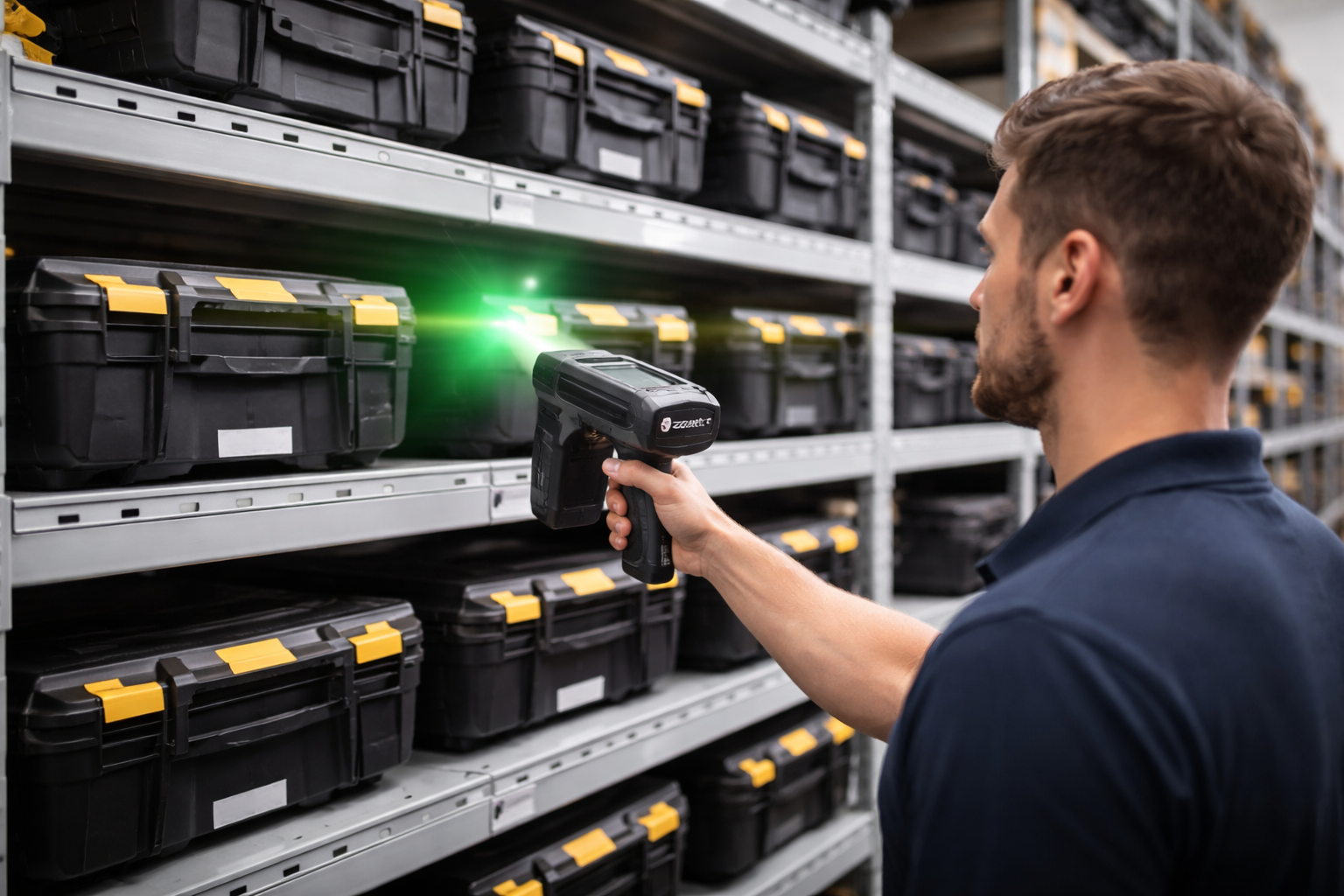
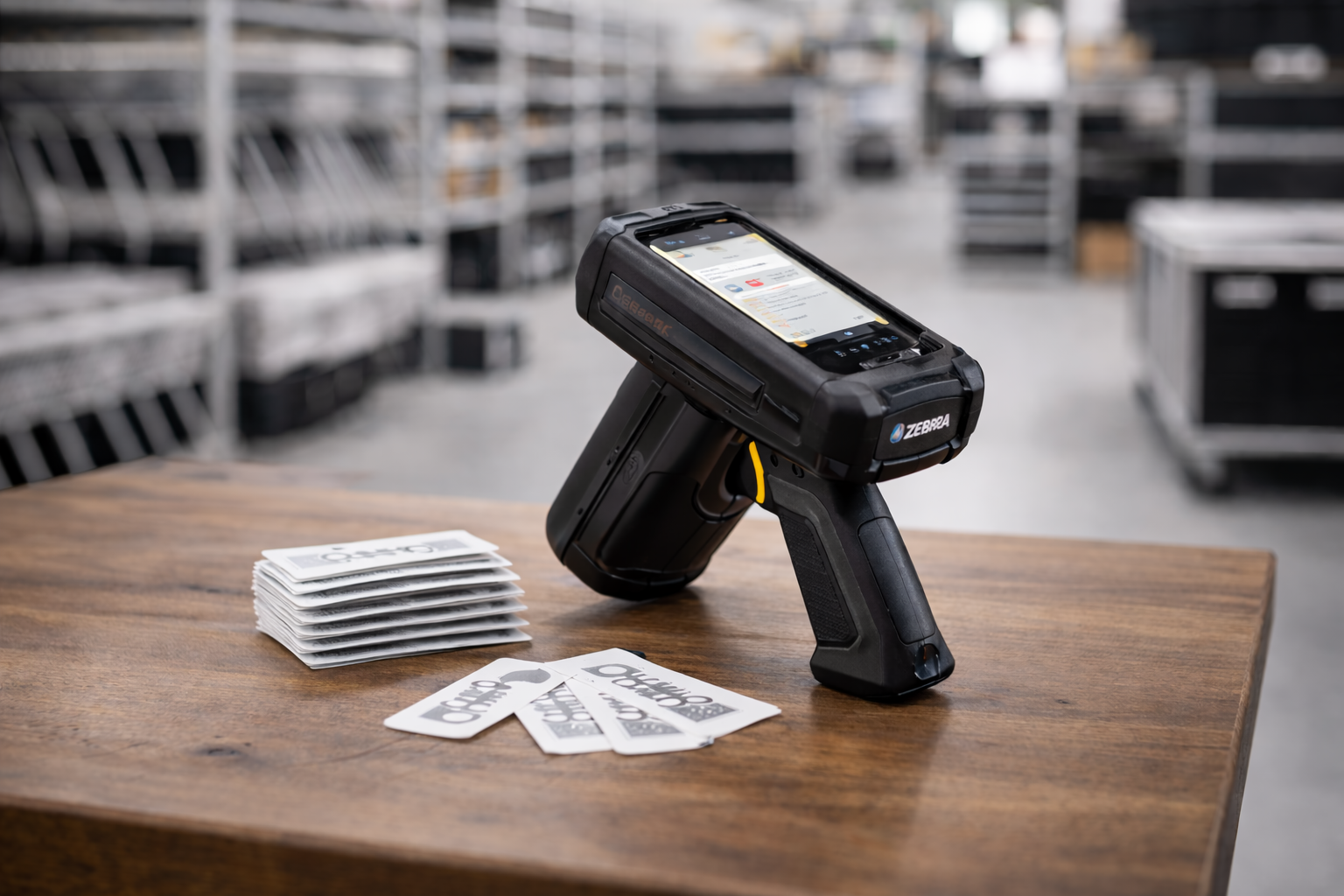
RFID tracking works differently from barcode scanning because it uses radio signals instead of optical codes to identify inventory. Each item is equipped with a small RFID tag that stores a unique identifier. When a handheld reader or scanner passes nearby, it detects the tag and records the item automatically.

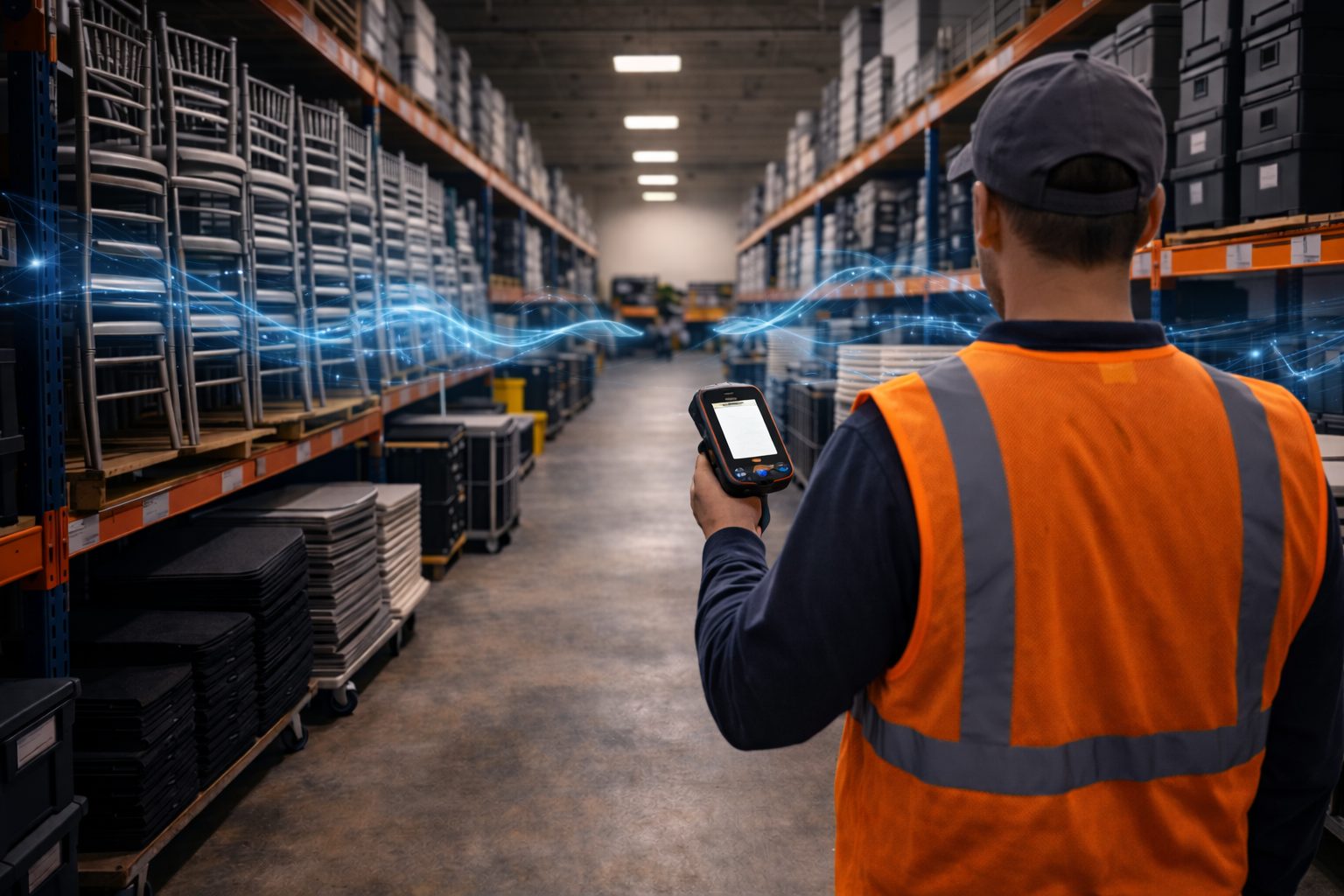
Unlike barcodes, RFID tags do not require line-of-sight. A reader can detect tags even if they are inside containers, stacked with other items, or stored on warehouse shelves. Many systems can also capture multiple tags at once, allowing staff to scan groups of inventory instead of handling each item individually.

In a rental warehouse, this can change how common workflows are handled. For example, staff may scan a cart of returned linens, a rack of chairs, or a group of tools and immediately verify the quantity without scanning each piece separately.

If you want a deeper explanation of how RFID systems work, including tags, readers, and the software that connects them to inventory systems, see our full guide on RFID for rental businesses.

RFID scanner with RFID tags

RFID vs Barcode Systems: Key Differences for Rentals

Both barcode and RFID systems help rental businesses track inventory, but they operate very differently in day-to-day warehouse workflows. Understanding these differences can help operators evaluate which system better supports their inventory volume, warehouse layout, and operational pace.

Scanning Speed

Barcode systems require staff to scan each item individually. In many rental warehouses, this means scanning every tool, chair, or piece of equipment as it is loaded or returned. For smaller inventories, this process is quick and reliable. However, when dealing with large quantities of items, the time required to scan each piece can add up.

RFID systems can detect multiple tagged items at once. When a reader passes near a group of tagged inventory, it can capture all nearby tags in seconds. This allows teams to verify larger quantities of equipment much faster than scanning items one by one.

Line-of-Sight Requirements

Barcode scanners must be able to clearly see the printed code in order to read it. If the label is covered, scratched, or facing the wrong direction, the item must be repositioned before it can be scanned. In busy warehouses, this can add small delays during loadout or returns.

RFID tags do not require direct visibility. Readers detect tags using radio signals, which means items can often be scanned while stacked, stored on shelves, or placed inside containers. This reduces the need to handle each item during the scanning process.

Inventory Counts

Inventory checks with barcode systems typically involve scanning each item to confirm it is present. For large inventories, this can take significant time because staff must physically handle and scan each piece.

RFID systems allow staff to scan groups of items during inventory checks. When a reader passes near tagged inventory, the system automatically records all detected tags. This can significantly reduce the time required for warehouse inventory counts.

Warehouse Efficiency

Barcode systems rely on consistent scanning behavior from warehouse staff. If an item is not scanned during loadout or return, the system may not accurately reflect its location or status. Strong warehouse processes usually keep this running smoothly, but the system still depends on manual scanning steps.

RFID reduces some of that manual handling. Because multiple items can be detected automatically, RFID systems can capture inventory movement more quickly during busy warehouse workflows.

System Cost

Barcode systems are generally inexpensive to implement. Barcode labels are low-cost, and handheld scanners are widely available. For many rental businesses, this makes barcode tracking a practical starting point for inventory management.

RFID systems typically require a larger upfront investment. RFID tags, readers, and supporting infrastructure are more expensive than barcode equipment. However, some businesses find that the efficiency gains can offset these costs over time.

Tag Durability

Barcode labels are usually printed stickers or tags attached to equipment. Over time, these labels can become damaged, scratched, or worn, especially in demanding warehouse environments.

RFID tags are often more durable because they are designed to withstand handling and environmental exposure. In some cases, tags can even be embedded or securely attached to equipment to protect them from wear.

Feature Barcode Systems RFID Systems
Scanning method Items scanned one at a time Multiple items detected simultaneously
Line-of-sight required Yes No
Inventory counts Each item scanned individually Groups of items scanned at once
Handling required Items often repositioned for scanning Items can remain stacked or stored
Setup cost Lower initial cost Higher upfront investment
Best suited for Smaller inventories or simpler operations Large inventories or high-volume workflows

When Barcodes Are the Better Choice

Barcode systems remain a practical choice for many rental businesses. They are inexpensive to implement, simple to operate, and reliable when warehouse processes are well established. For operations with manageable inventory levels, barcode scanning often provides the tracking visibility needed to accurately keep equipment moving in and out of the warehouse.

Barcodes tend to work especially well when items are large and easy to scan individually. Equipment such as generators, lifts, or larger tools can be scanned quickly during loadout and return without adding significant time to warehouse workflows. For many rental teams, this level of tracking strikes the right balance between cost and operational control.

Barcode systems are also a strong fit for businesses that are still growing their inventory or refining their warehouse processes. Because labels and scanners are relatively inexpensive, operators can implement barcode tracking without a large upfront investment.

If you’re considering implementing or improving a barcode system in your warehouse, our guide on setting up a barcode inventory system for rental businesses walks through the process in more detail.

scanning barcoded linens

When RFID Makes More Sense

RFID systems tend to become more valuable as rental operations grow and inventory volume increases. When warehouses manage thousands of items moving in and out every week, scanning equipment one item at a time can begin to slow down daily workflows.

RFID can help reduce that friction by allowing staff to verify larger groups of inventory quickly. Operations that handle bulk items, such as linens, chair covers, or accessories, often see the biggest benefit because these items can be difficult to count efficiently using traditional barcode scanning.

RFID can also improve visibility in larger warehouses where equipment moves frequently between shelves, staging areas, and trucks. Instead of manually scanning each item during inventory checks, teams can use RFID readers to confirm quantities more quickly.

For rental businesses that are experiencing rapid growth or managing high volumes of equipment, RFID can provide the speed and visibility needed to keep warehouse operations running smoothly.

RFID scanning

Many Rental Businesses Use RFID and Barcodes Together

In practice, many rental businesses do not choose one system exclusively. Instead, they use barcodes and RFID together, depending on the type of inventory they manage.

Barcodes often remain the most practical option for larger equipment that can be scanned quickly during loadout and return. Items such as generators, lifts, or power tools are easy for warehouse staff to scan individually, making barcode tracking simple and reliable.

RFID is often introduced for inventory that is harder to track efficiently with manual scanning. Bulk items such as linens, chair covers, or accessories can be counted much faster when multiple tags are detected at once. In these cases, RFID helps reduce the time spent on inventory checks and large return loads.

Using both systems allows rental businesses to apply the right tracking method to different types of inventory while keeping costs manageable.

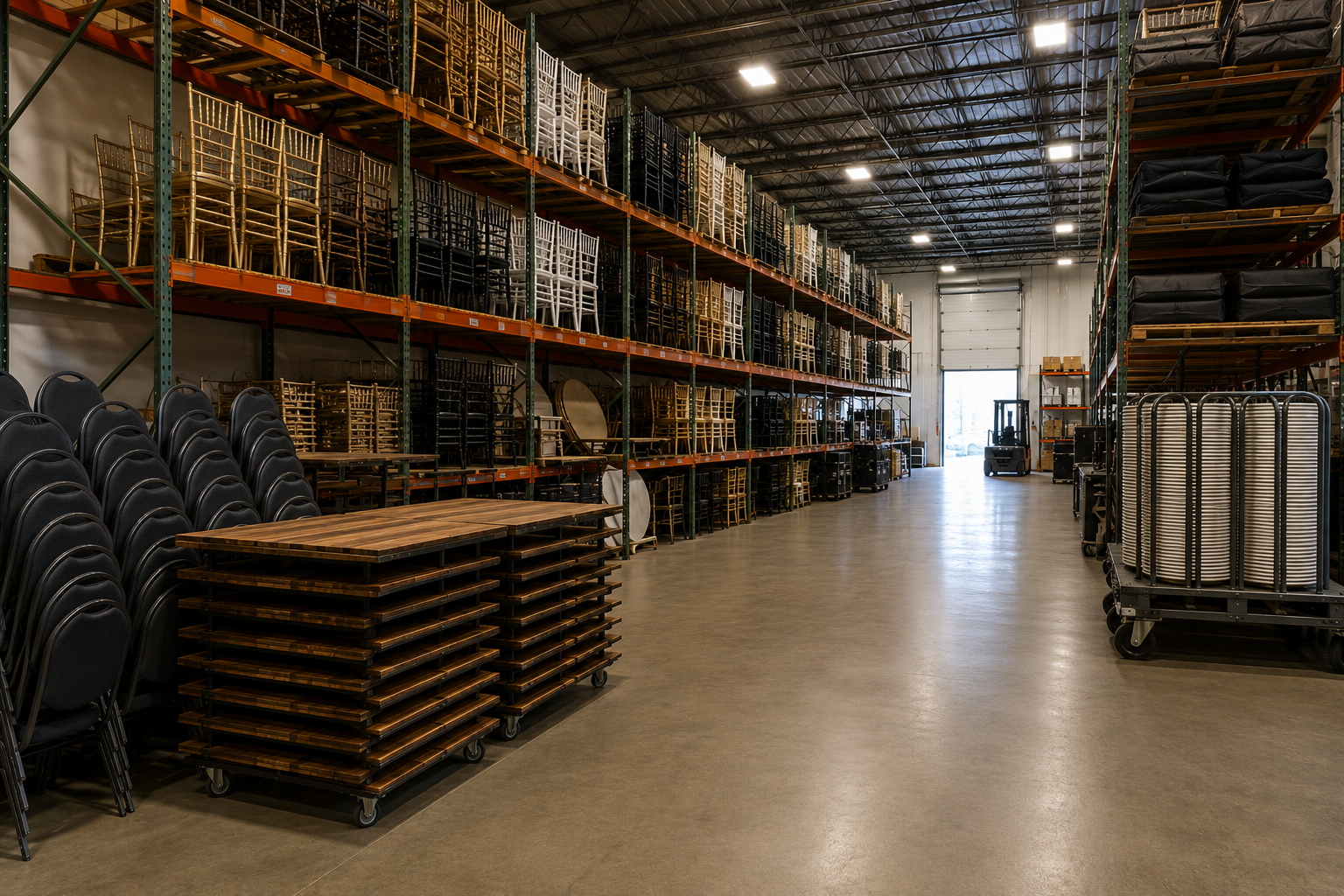
man scanning warehouse inventory

Cost Comparison: RFID vs Barcode Systems

Barcode systems remain inexpensive to implement. Printing barcode labels typically costs only pennies per item, and scanners are widely available at low cost.

RFID systems historically required a much larger upfront investment, but modern platforms have made the technology more accessible. For example, RFID solutions such as Easy RFID Pro now offer subscription pricing that starts around $79 per month for smaller deployments. Businesses still need RFID tags and hardware scanners, but the monthly model allows many rental companies to adopt RFID gradually as their operations grow.

scanning inventory with RFID

Choosing Rental Software That Supports Barcode and RFID Workflows

No matter which tracking system you choose, the technology only works well when it is connected to the software managing your inventory.

Rental management platforms are responsible for recording scans, updating equipment availability, and ensuring items move correctly through statuses such as on rent, returned, inspected, or available. Without that connection, barcode and RFID scans simply collect data without improving daily operations.

For barcode workflows, rental businesses benefit from software that enables fast, reliable scanning during loadout and return. TapGoods is known in the rental industry for offering some of the fastest barcode scanning, allowing warehouse teams to process equipment quickly without slowing operations.

For businesses exploring RFID, TapGoods also integrates with Easy RFID Pro, a platform designed specifically for rental warehouses. This integration allows RFID scans to automatically update inventory status in TapGoods, helping teams track equipment movement without adding extra manual steps.
scanning inventory with RFID

Find a Solution That Works for You

Both barcode and RFID systems can help rental businesses track inventory more accurately and keep warehouse operations running smoothly. Barcodes remain a reliable and affordable option for many operations, while RFID can provide additional speed and visibility as inventory volume grows. Many rental companies ultimately use a combination of both to support different types of equipment.

If you’re evaluating inventory tracking systems for your rental business, the right software can make all the difference. TapGoods supports fast barcode scanning and integrates with Easy RFID Pro, helping rental teams track inventory efficiently as their operations scale.

If you’d like to see how TapGoods can support your warehouse workflows, schedule a demo with our team today.

Book a Demo with TapGoods

Frequently Asked Questions

Barcodes are inexpensive, easy to implement, and work well for many types of rental equipment. For businesses with manageable inventory volumes or larger items that are easy to scan, barcode systems often provide all the tracking capability needed.

In most cases, yes. Barcode labels cost only pennies per item, while RFID tags typically cost around one dollar each. RFID systems also require specialized readers and hardware, although newer subscription platforms have made RFID more accessible for growing businesses.

Not always. Many rental businesses use both technologies together. Barcodes may be used for larger equipment that is easy to scan, while RFID is introduced for bulk inventory or items that are difficult to count manually.

RFID is typically faster for large inventory counts because a reader can detect multiple tags simultaneously. Barcode systems require each item to be scanned individually, which can take longer when counting large quantities of equipment or accessories.

RFID is not always better, but it can be faster for certain workflows. RFID readers can detect multiple tags at once, which can make inventory counts and large returns quicker. Barcode systems require scanning each item individually, but they remain reliable and cost-effective for many rental operations.