
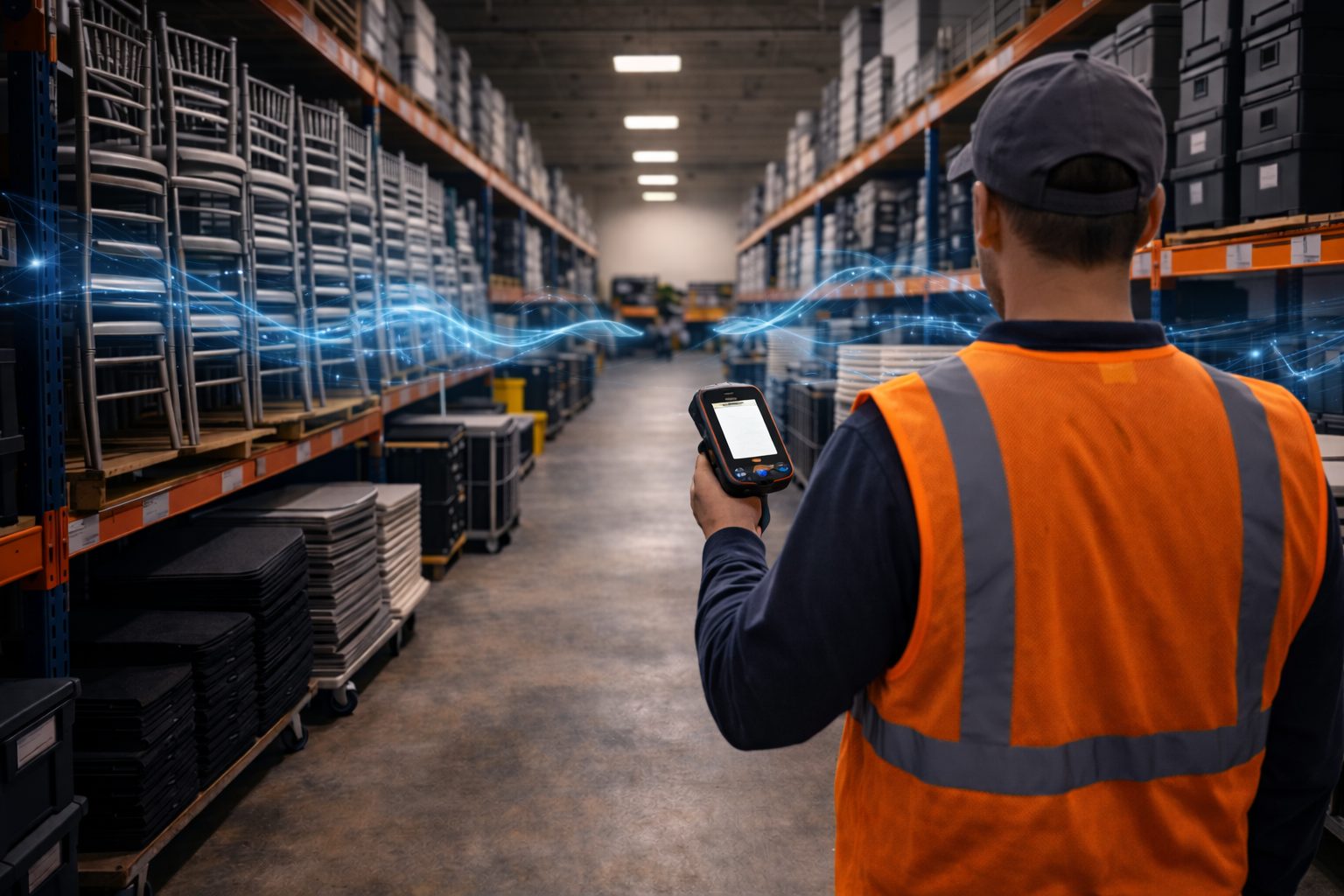
You already know what RFID is. You’ve likely seen the demos, maybe even evaluated a few systems. 

But the real question isn’t whether RFID works. It’s whether it works inside your operation… under pressure, during loadouts, on busy return days, and when accuracy actually matters.

Whether you’re using TapGoods PRO today or evaluating new software, this is what RFID actually looks like in a real rental workflow with Easy RFID Pro.

RFID in tapgoods

What is RFID?

RFID (radio-frequency identification) allows you to scan multiple tagged items at once without needing to see or handle each one individually.

If you want to understand how it compares to barcodes or how it works at a technical level, you can read more in our RFID 101 guide (the complete breakdown for rental businesses) or our RFID vs barcodes breakdown.

RFID scanning in tapgoods

How RFID Scanning Works in TapGoods PRO (Quick Version)

At a high level, RFID inventory tracking in TapGoods PRO works like this:

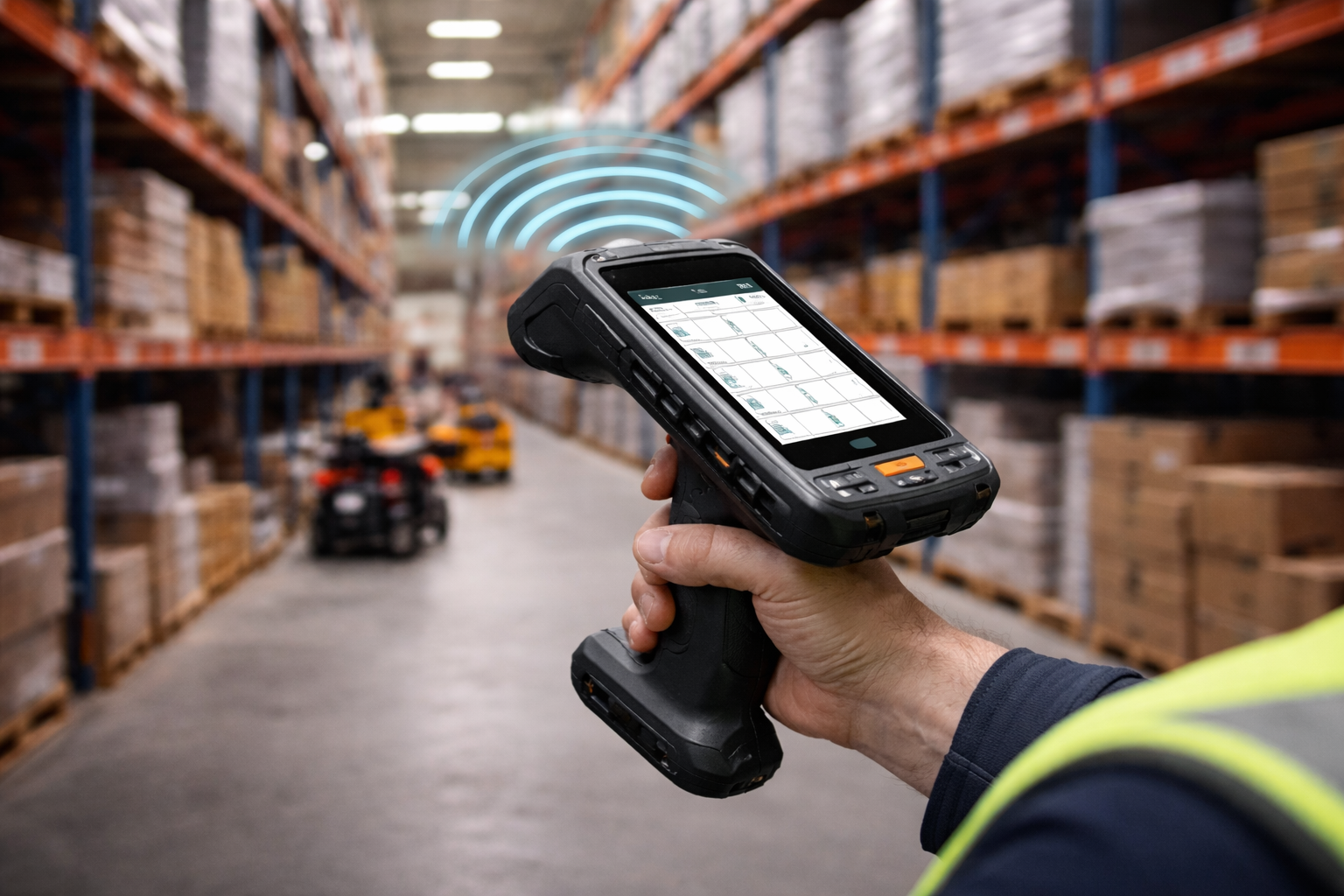
On a mobile device with an RFID reader, your team scans a TapGoods order and instantly sees what should be there. 

Here is the simplified process:

  1. You scan an order
  2. RFID detects everything in range
  3. Easy RFID Pro compares what was scanned against the order and updates TapGoods accordingly
  4. Inventory can be updated automatically or with user confirmation, depending on your workflow
  5. Availability reflects reality in real time.

It removes the need for manual counting and one-by-one scanning, and reduces the reliance on assumptions about what’s actually ready.

RFID scanning

How RFID Works in Day-to-Day Rental Operations – With TapGoods

RFID only matters if it works during real workflows: returns, loadouts, and everything in between. Here’s how RFID functions inside TapGoods PRO when it’s part of your day-to-day rental operations.

1. Before a Truck Leaves: Verifying the Order

Instead of scanning items one by one, your team starts with the order.

They open or scan the order using Easy RFID Pro (via QR code or order lookup), which pulls up:

  • The order
  • The customer
  • Every item expected on that truck

From there, they scan the load. RFID detects everything in range and compares it to the order in real time. If something is missing, the system flags it immediately:

You scanned 20. You’re missing 5. No need to double-check or recount. 

Once everything is accounted for, the information and data are synced back into TapGoods through the integration, and the order is ready to go.

2. When the Truck Comes Back: Processing Returns

Returns are where inventory usually breaks down.

Instead of unloading, counting, and double-checking, your team scans the return as it comes in.

RFID captures everything at once and compares it to what should have come back. No need to unpack bins and count a billion pieces.

3. Inventory Moves Through Your Workflow

This is where RFID goes beyond basic tracking.

In TapGoods, every time an item is scanned, it’s not just being counted; it’s being moved through your workflow. Instead of a simple “in” or “out,” items can be assigned a status that reflects what actually needs to happen next.

For example, the same set of chairs coming back on a truck might not all be treated the same:

  • Some weren’t used and are ready to go back out
  • Most need cleaning
  • One is damaged and needs repair

So instead of inventory piling up as “returned” and waiting on someone to sort it out, it moves forward immediately.

4. Over Time, You See the Full Lifecycle of Every Item

Once an item has an RFID tag, every scan becomes part of its history. Not just where it is, but what it’s been through. Over time, you can see things like:

  • User activity
  • How many times it’s been rented
  • When it was returned damaged
  • How often it’s been repaired
  • When it was taken out of service
  • Last known location

And all of this information will include timestamps. For example, a chair might be rented 15 times without issue, then come back damaged on the 16th. When you scan the damaged chair, its status is recorded and added to its history.

With Easy RFID Pro + TapGoods, you have a record of how each item is actually performing with no manual input needed. That changes how you make decisions, such as when to repair or replace, and which items are costing you the most time and money. 

5. Inventory Becomes Easy to Locate in Your Warehouse

In day-to-day operations, time is often lost trying to locate items that aren’t where they’re expected to be.

With RFID, tagged inventory can be located using the scanner’s signal, allowing your team to narrow down an item’s location without searching aisle by aisle. As your team moves closer, the scanner-supported RFID readers can guide users to items based on signal strength.

This is particularly useful when:

  • Items have been misplaced
  • The inventory is frequently moving between areas
  • The warehouse layout is large or complex

Instead of relying on memory or manual searching, your team can quickly identify where items are and move on to the next task.

6. Cycle Counts Become Much Faster

Cycle counts, regular checks to confirm what inventory you actually have on hand, are often time-consuming and disruptive to normal operations. They typically require pulling people off other work, handling inventory manually, and still leaving some uncertainty around the results.

With RFID in TapGoods PRO, cycle counts can be done by walking through a section of the warehouse and scanning. As items are detected, the system automatically records them and compares them with what should be there.

This allows counts to happen more frequently and with less disruption, since they don’t require stopping operations or handling each item individually.

In practice, what used to take hours can be completed much faster and with more consistent results because it’s not dependent on manual counting.

RFID scanner with RFID tags

Isn’t Implementing RFID Expensive?

For most operators, the hesitation around RFID comes down to two things:

  • It feels like a major operational change.
  • And historically, it’s been expensive.

Both are fair concerns.

Traditional RFID systems often required significant upfront investment and were built for large-scale operations, not rental businesses running fast-paced warehouse workflows.

What’s changed is how RFID is being implemented. And the true strength in this comes in two parts – an RFID system that’s actually built for rentals and an inventory management software that let’s you use that data to streamline operations.

Easy RFID Pro: Built for Rental Professionals

Solutions like Easy RFID Pro were designed specifically for rental companies, with mobile workflows that fit into how warehouses already operate. So instead of rebuilding your process to fit a workflow that doesn’t match your business, your team is scanning orders, returns, and inventory using a system built for rental businesses.

At the same time, the cost of getting started has become far more accessible. What was once a large, enterprise-level investment is now something growing operations can realistically adopt and scale over time. And you don’t need fixed RFID to get started! Most rental companies start with mobile RFID and expand over time, without needing to install fixed readers upfront.

So while RFID used to require significant change, today it’s much more about improving the process you already have.

TapGoods PRO: Rental Software Built for Automation

RFID only solves part of the problem.

The real challenge in rental operations isn’t just knowing where inventory is, it’s keeping orders accurate, returns clean, and your team aligned under pressure. 

That’s what TapGoods PRO is built around.

So when RFID is integrated into TapGoods it’s reducing the points where things usually break:

  • Missed items on a loadout
  • Unclear inventory availability
  • Returns that sit unresolved

That means your team isn’t sorting through data or second-guessing what to do next. They’re seeing exactly what’s needed at the moment they need it.

And just as important, it’s all presented in a clean, easy-to-use interface. In fast-moving warehouse environments, that matters. Because your team doesn’t want to dig through screens or figure out what the system is telling them. They need clarity at a glance, and the ability to act on it immediately.

RFID gives you visibility. TapGoods PRO makes that visibility usable and lets your team work faster.

RFID scanning

See How RFID Would Work in Your Operation

Every rental operation is different—but the challenges tend to look the same.

  • Inventory that’s unclear.
  • Returns that take longer than they should.
  • Loadouts that rely on double-checking and experience.

RFID starts to address those problems by removing manual steps and improving visibility.

But the real impact comes from how that information is used day to day.

If you’re evaluating RFID—or looking at ways to streamline your operation—it’s worth seeing how it works inside a system built around those workflows.

You can walk through it with your own inventory and process to see where it fits.

Schedule a demo and walk through it step by step with your team.

Book a Demo with TapGoods

Frequently Asked Questions

Easy RFID Pro connects directly to TapGoods to sync scanned inventory with orders in real time. When items are scanned using an RFID reader, the system compares them to the order in TapGoods and updates inventory status based on your workflow.

After a scan, Easy RFID Pro sends the results to TapGoods, where the system compares expected vs. scanned items. TapGoods then flags missing or extra items and updates inventory status based on your configured workflow.

Yes. Inventory can be updated automatically or require user confirmation, depending on how your workflow is set up. This gives teams control while still reducing manual work.

Your team starts by opening or scanning an order (via QR code or lookup). Easy RFID Pro then uses that order as the reference point, comparing all scanned items against what should be on that order in TapGoods.

If expected items are not detected during a scan, TapGoods flags them immediately. This allows your team to resolve issues before a truck leaves or before a return is finalized.

Each scan in TapGoods does more than count items. It moves inventory through statuses like returned, cleaning, maintenance, or ready-to-rent, so items reflect their true state in the operation.

No. The integration is designed to fit into existing rental workflows. Teams continue working from orders, loadouts, and returns—RFID simply removes manual steps and improves accuracy.