In equipment rental, turnover can feel inevitable. The work is physical, the pace is fast, and peak season has a way of arriving all at once.
More often than not, turnover isn’t about the work being too hard — it’s about the work being harder than it needs to be. When daily operations feel chaotic rather than predictable, even good hires struggle to stay.
Here are five practical ways equipment rental businesses can reduce churn and build a team that stays.
Table of Contents
1. Keep a Clean and Organized Warehouse
If your warehouse is disorganized, your team feels it every single day.
That daily friction wears people down.
The warehouse simply cannot live in one guy’s head. This creates burnout for that person and absolute chaos when he leaves.
A clean, organized warehouse conserves your team’s energy. Here’s what that actually looks like in a tool and equipment rental business:
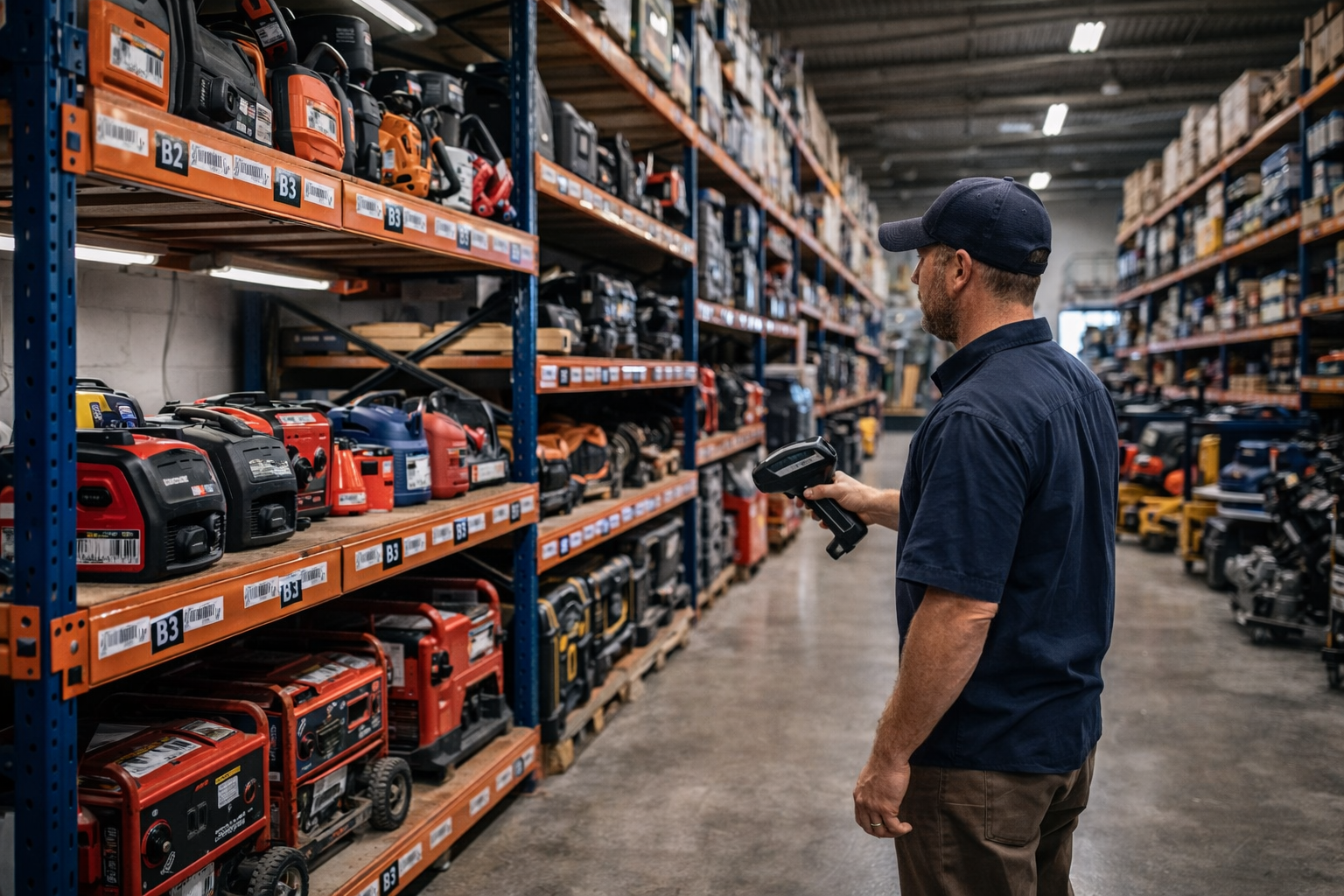
- Give every item a defined home. Equipment, attachments, cords, and small tools should be assigned to designated zones. If someone new walks in, they should be able to find what they need without asking three people.
- Create a clear check-in area. Returned equipment should not be included in ready-to-rent inventory. Separate space for inspection, cleaning, and service prevents confusion.
- Label shelves and zones clearly. Paint lines on the floor. Use large signage. Make it obvious. Organization should not rely on memory.
- Standardize parking spots and tool locations. Skid steers go in one section. Booms in another. Generators in another. Consistency reduces searching.
- Train everyone on the system. Organization should not depend on one “yard guy” who knows where everything goes. Every team member should understand the layout and expectations.
When these processes are built into the operation, the whole team works faster and with less stress.
Related:
2. Invest in Software That Makes Employees’ Jobs Easier
If your team has to fight your system every day, they will eventually leave. Not because they hate the job. Because they’re tired of working harder than they need to.
Think about the daily pain points:
- The counter isn’t sure if equipment is truly available.
- The yard writes things down and re-enters them later.
- Returns sit in limbo because there’s no clear check-in flow.
- Long-term rentals require contract workarounds.
- Billing mistakes lead to uncomfortable customer calls.
None of this feels dramatic in the moment. But when it happens all day, every day, it wears people down.
When employees trust what they see on the screen, there are fewer customer conflicts, less internal finger-pointing, and decisions feel easier with less bureaucracy.
If you want a deeper breakdown of what to look for in tool & equipment rental software, read our guides to rental software for tool & equipment rental businesses:
- Top 6 Tool & Equipment Rental Software Features to Look For
- Best Tool Rental Software Options for Small Businesses
- What Is The Best Inventory Management Software for Tool & Equipment Rentals?
- How to Switch Tool & Equipment Rental Software Without Losing Data & Customers
You don’t need to overhaul everything overnight. But if your team fights your software daily, it’s worth taking a hard look at whether the system is supporting them — or slowing them down.

3. Create Clear Roles and Accountability
In year-round equipment rental businesses, everyone stays busy. When everyone is busy, responsibilities can blur. For many businesses, employees may wear multiple hats. And that flexibility isn’t a bad thing!
In fact, for many teams, it’s a strength. Cross-training builds resilience and keeps operations moving.
Problems come up when it’s not clear who owns what. When ownership isn’t clear:
- Availability gets confirmed without a final check.
- Damage goes undocumented because everyone assumes someone else handled it.
- Deliveries are scheduled without anyone being accountable for the final plan.
When something goes wrong, and no one knows who was responsible, frustration builds quickly. Over time, that tension drives good employees away.
Your rental software should reflect this structure.
Look for systems with customizable, role-based permissions. Even if employees are cross-trained, access should align with their responsibilities. Counter staff don’t need full pricing controls. Yard techs don’t need billing access.
Limiting access fundamentally prevents accidental changes and maintains clear accountability.
4. Standardize Training So New Hires Don’t Get Overwhelmed
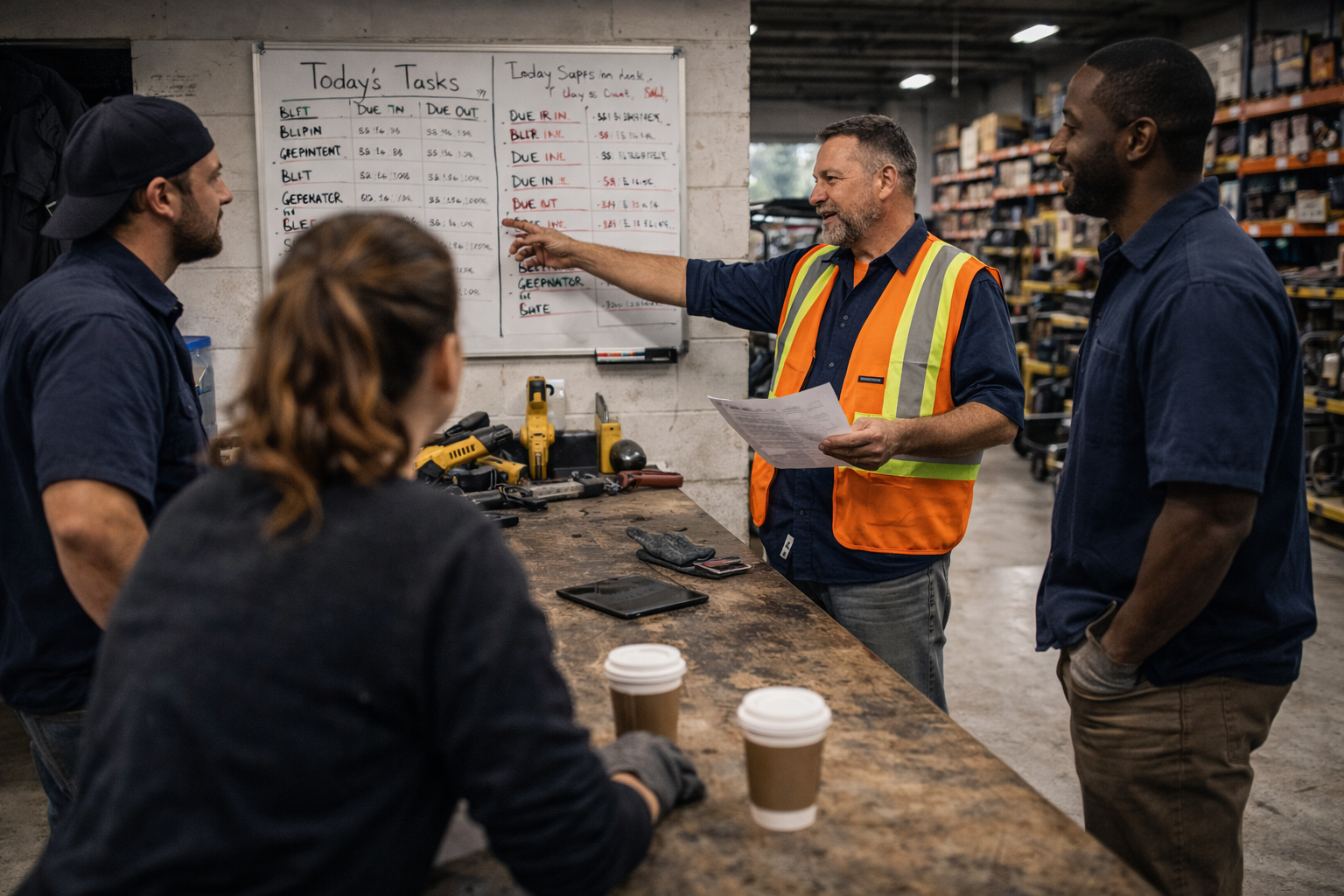
If you’ve been in equipment rental for years, most of this feels second nature. You can spot damage quickly, you know where everything sits in the yard, and you have the experience to instinctively tell when something just “doesn’t sound right.”
That level of awareness comes from great experience. But new hires don’t have that yet.
When training someone new, ask yourself: “What would I have wanted somebody to teach me when I was brand new at this?”
And it doesn’t take a complicated training manual. Just remember, if something is important enough to correct someone for, it’s important enough to document for training purposes.
Simple Training Checklist for New Hires
Every new employee should be trained on:
- Warehouse layout and equipment zones
- Step-by-step check-in and inspection process
- Damage documentation standards
- Basic equipment handling and safety procedures
- How to update equipment status in your rental software
- Who owns what inside the operation
- What they are responsible for during their shift
Tip: Brain-dump the above processes into a document, then attach it to a prompt in ChatGPT. The AI will create clean, readable, and easy-to-follow instructions for new employees.
5. Offer Growth & Don’t Underestimate Culture
Not every equipment rental business is large enough to promote someone every year. And not every operation can afford big bonuses or new management titles. That’s absolutely okay.
You can create growth without dramatically increasing overhead:
- Offer certifications on specific equipment types. Helping someone become certified builds pride and competence.
- Define progression within roles. Yard tech → senior tech → lead tech. Counter rep → senior counter → account lead. Even small increases in title & responsibility signal trust.
- Cross-train intentionally. Let employees understand dispatch, service scheduling, or inventory planning. It builds resilience in your team and keeps the work interesting.
- Give ownership of something meaningful. Safety checks. Inventory audits. New hire mentoring. Responsibility creates engagement.
And don’t underestimate culture.
Employees who enjoy their team and feel respected are more likely to stay, even when the work is demanding.
How do you build a great culture?
- Clear expectations.
- Fair feedback.
- Acknowledge effort.
- Treat people like competent professionals.
These things don’t cost much. But they matter. You may not be able to promise executive titles. But you can offer growth, trust, and a workplace where people feel good coming to work every morning.

Want to Make Your Employees’ Lives Easier?
When you reduce chaos, clarify ownership, train intentionally, and equip your team with the right tools, retention naturally improves.
If you want to see how rental-focused software can simplify operations and make your counter, yard, and dispatch teams’ day easier, schedule a demo with TapGoods to see it in action.
Frequently Asked Questions
Turnover in equipment rental is often caused by operational chaos rather than the physical demands of the job. When warehouses are disorganized, responsibilities are unclear, and software creates friction, even strong hires become overwhelmed. Structure and predictability reduce burnout significantly.
Yes. When rental software provides accurate availability, clear status tracking, and role-based accountability, it removes unnecessary conflict between counter, yard, and billing teams. Fewer daily frustrations lead to longer employee tenure.
The first 30–90 days are critical. Clear training, documented processes, and defined responsibilities help new hires build confidence. When expectations are visible and consistent, employees are more likely to stay.
Technicians are more likely to stay when they understand their responsibilities, have clear inspection standards, and feel their work contributes to a well-run operation. Clarity and respect go a long way.