RFID for equipment tracking is becoming an important tool as rental businesses grow and inventory becomes harder to manage. As more equipment moves in and out of the warehouse, common problems start to appear: items go missing, counts become inaccurate, and warehouse checks take longer than they should.
RFID for rentals helps address these visibility challenges by enabling businesses to quickly scan and identify equipment without manual counting.
This guide explains what RFID is, how it works, and how rental companies use it to track equipment more efficiently.
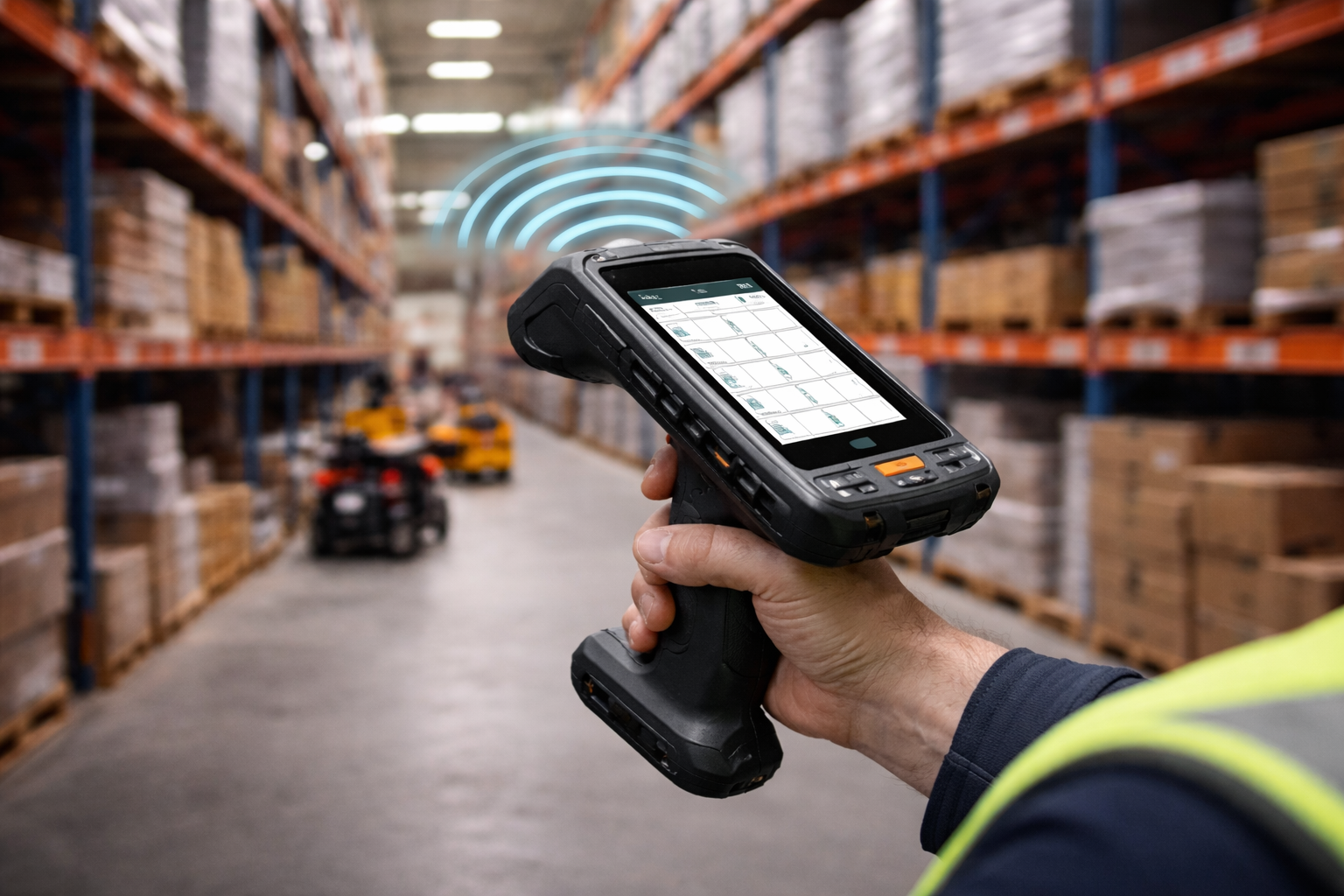
Table of Contents
What Is RFID?
RFID stands for Radio Frequency Identification. It is a technology that uses radio waves to identify and read tags attached to physical items.
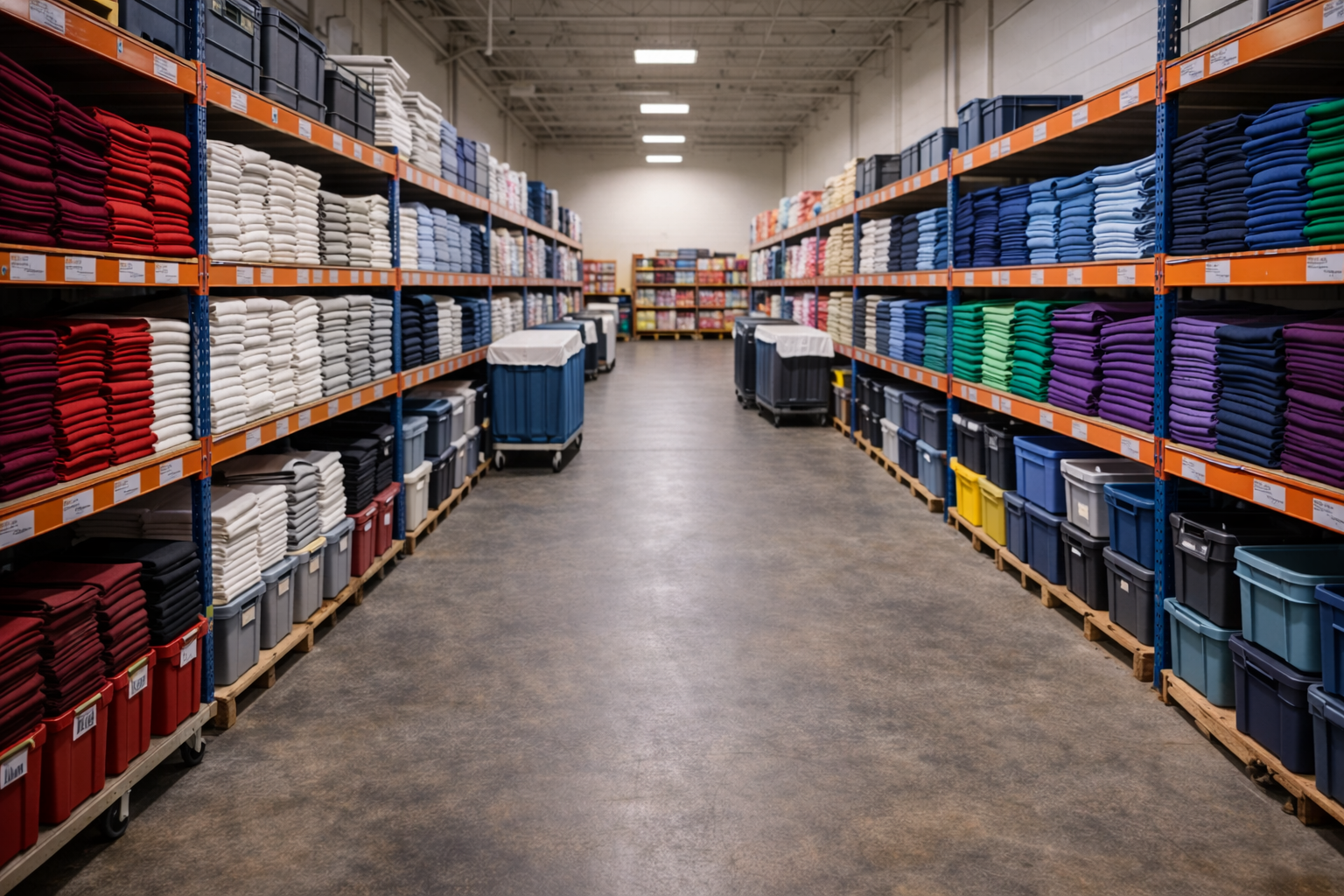
For party and equipment rental businesses, RFID is often used to track high-volume inventory that is difficult to count manually. For party rentals, linens, chair covers, napkins, and other bulk items can be tagged so they can be scanned quickly as they move through the warehouse. Instead of counting hundreds of linens or small items one by one, staff can scan large groups at once and instantly confirm quantities.
Equipment rental companies can also use RFID to track tools and equipment. Items such as drills, generators, and compact equipment can be tagged so staff can quickly confirm what has been loaded onto a truck or returned to the warehouse.
This helps rental companies maintain accurate inventory counts and process returns faster after events.
What Is the Purpose of RFID for Rentals?
The purpose of RFID in rental businesses is to make inventory tracking faster, more accurate, and easier to manage as operations grow. Rental companies handle equipment that constantly moves between warehouses, trucks, and job sites. Without a reliable tracking system, it becomes difficult to maintain accurate counts and confirm the location of items.
RFID helps solve these problems by enabling inventory to be automatically identified and scanned. Instead of counting items one by one, rental teams can scan multiple tagged items at once and quickly confirm quantities.

The Three Core Components of an RFID System
An RFID system consists of a few key components that work together to identify and track inventory.
- RFID Tags
- RFID Readers/Scanners
- RFID Software
While the technology behind RFID can seem complex, the system itself is fairly simple in practice.
RFID Tags
RFID tags are small devices attached to rental inventory that store a unique identifier for each item. In party rental businesses, tags might be attached to items such as linen bundles, chair stacks, or décor pieces so they can be counted quickly when they are returned from an event.
In equipment rental operations, RFID tags can be affixed to tools such as drills, generators, and compact equipment. Once tagged, each item can be identified instantly when scanned, eliminating the need for manual inventory checks.
RFID Readers or Scanners
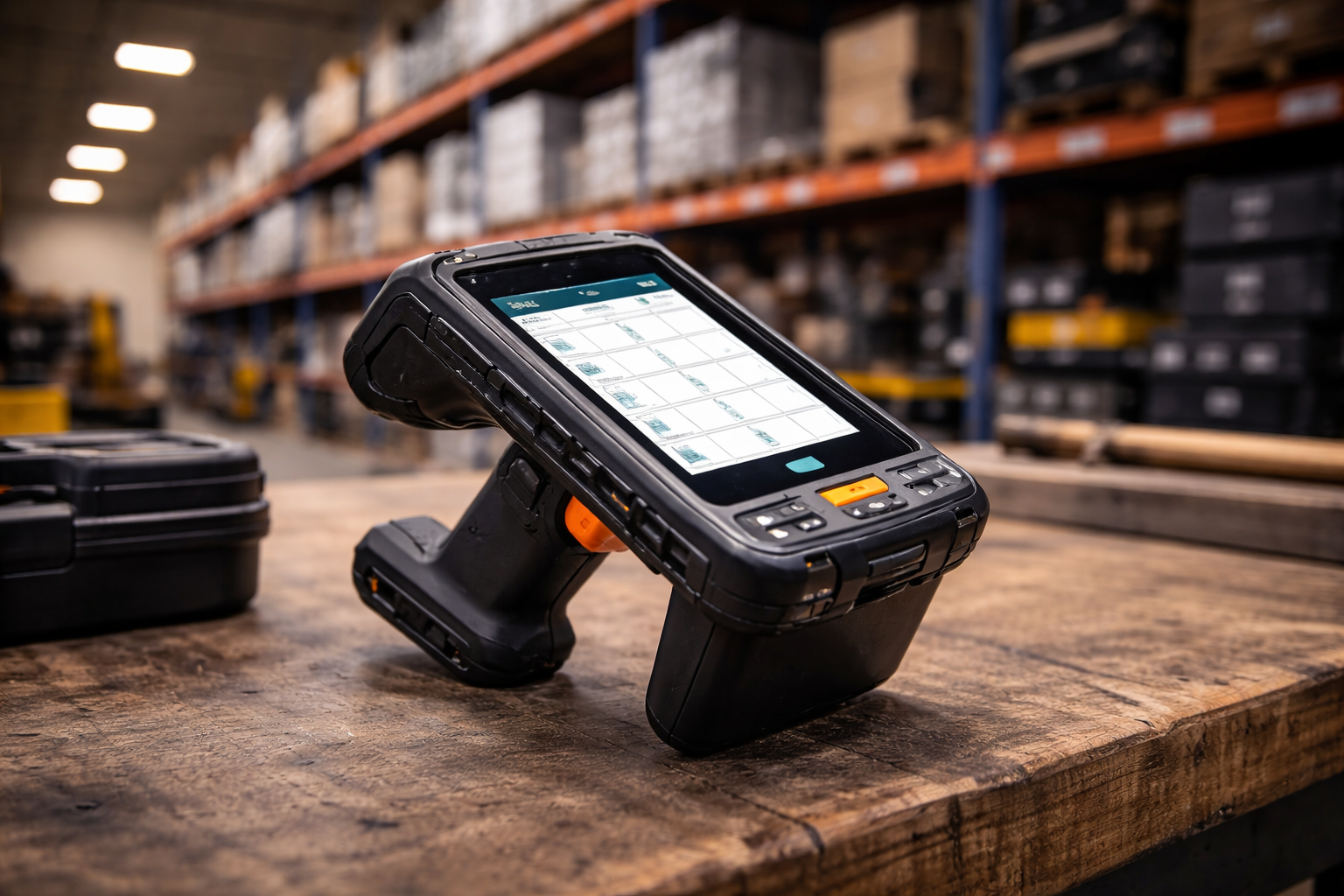
RFID readers, sometimes called scanners, are the devices used to detect and read RFID tags. These readers send out radio signals that activate nearby tags and retrieve the item’s unique identifier. In a rental warehouse, staff might use handheld readers to scan equipment during loadout or check-in.
Many RFID scanners can also help locate inventory inside the warehouse. When searching for a specific tagged item, the scanner detects the RFID tag’s signal and provides feedback, often as a beeping sound that speeds up or grows louder as the user gets closer. This makes it much easier to find misplaced tools, equipment, or inventory stored in large warehouse areas.
We’ll go into this function in more detail later in this blog.
RFID Software That Records the Data
RFID software connects the tag data collected by scanners to your inventory system. When a reader detects a tag, the software records which item was scanned and updates its status.
In rental operations, RFID systems are typically connected to rental management software. This allows the system to automatically update inventory availability as items are scanned during loadout, returns, or warehouse checks.
For example, when a tagged tool, generator, or linen bundle is scanned, the rental software can immediately record whether the item is in the warehouse, on rent, or returned. This creates a real-time record of inventory movement and helps rental teams maintain accurate equipment counts.

How RFID Works in a Rental Warehouse (Step-By-Step)
RFID systems identify inventory by allowing tags attached to equipment to communicate with scanners using radio signals. In rental operations, this process happens almost instantly and helps teams verify equipment without manual counting.
- RFID tag is attached to equipment: Each rental item receives a small RFID tag. Party rental companies may attach tags to linen bundles or chair stacks, while equipment rental companies often tag tools, generators, or compact machinery.
- Reader scans the tag using radio waves: An RFID scanner sends out a radio signal that activates nearby tags. Unlike with barcodes, the scanner does not require a direct line of sight, so multiple items can be detected simultaneously.
- Tag transmits its unique identifier: When activated, the RFID tag returns its unique ID. This number identifies the specific item inside the rental company’s inventory system.
- Software records the item’s identity and status: The RFID system sends the tag information to the inventory software, which records the scan and updates the item’s status. This allows rental teams to quickly confirm what equipment is present in the warehouse, what is being loaded for delivery, and what has been returned.
RFID vs Barcodes
Both RFID and barcode systems are used to track inventory, but they work very differently in rental environments.
While barcode systems require staff to scan each item individually, RFID allows multiple tagged items to be detected at once, which can significantly speed up warehouse operations.
Here are the key differences between RFID and Barcodes:
Barcode Scanning Requires Line-of-Sight
With barcodes, warehouse staff must point the scanner directly at each label. This is called line-of-sight, meaning the scanner must have a clear visual path to the barcode in order to read it.
In practice, this means the barcode cannot be covered, folded, stacked behind other items, or facing the wrong direction. Staff often need to pick up or reposition items so the barcode label is visible to the scanner.
In a rental warehouse, this can slow down inventory checks. Counting 200 linens, chair covers, or small tools requires scanning each barcode individually and ensuring the label is visible each time. When items are stacked, bundled, or packed tightly on a truck, workers may have to move equipment around just to find the barcode before it can be scanned.
RFID Can Read Multiple Items at Once
RFID scanners can detect many tags simultaneously. Instead of reading a visual label, as a barcode scanner does, an RFID reader sends a radio signal that activates nearby RFID tags. Each tag responds by transmitting its unique identifier back to the scanner.
Because this communication occurs via radio signals, the scanner can receive responses from many tags simultaneously. The reader collects those signals and sends them to the inventory system, which records each detected item.
In a rental warehouse, this allows staff to scan groups of inventory all at once. For example, a team member could scan an entire rack of tools, a pallet of equipment, or a cart full of linen bundles and quickly confirm how many tagged items are present without handling each one individually.
RFID Can Be Scanned Without Direct Visibility
Because RFID uses radio signals instead of optical scanning, tags do not need to be visible to the scanner. The reader sends out a signal that can pass through many common materials, allowing it to detect tags even when they are inside bins, stacked with other items, or partially covered.
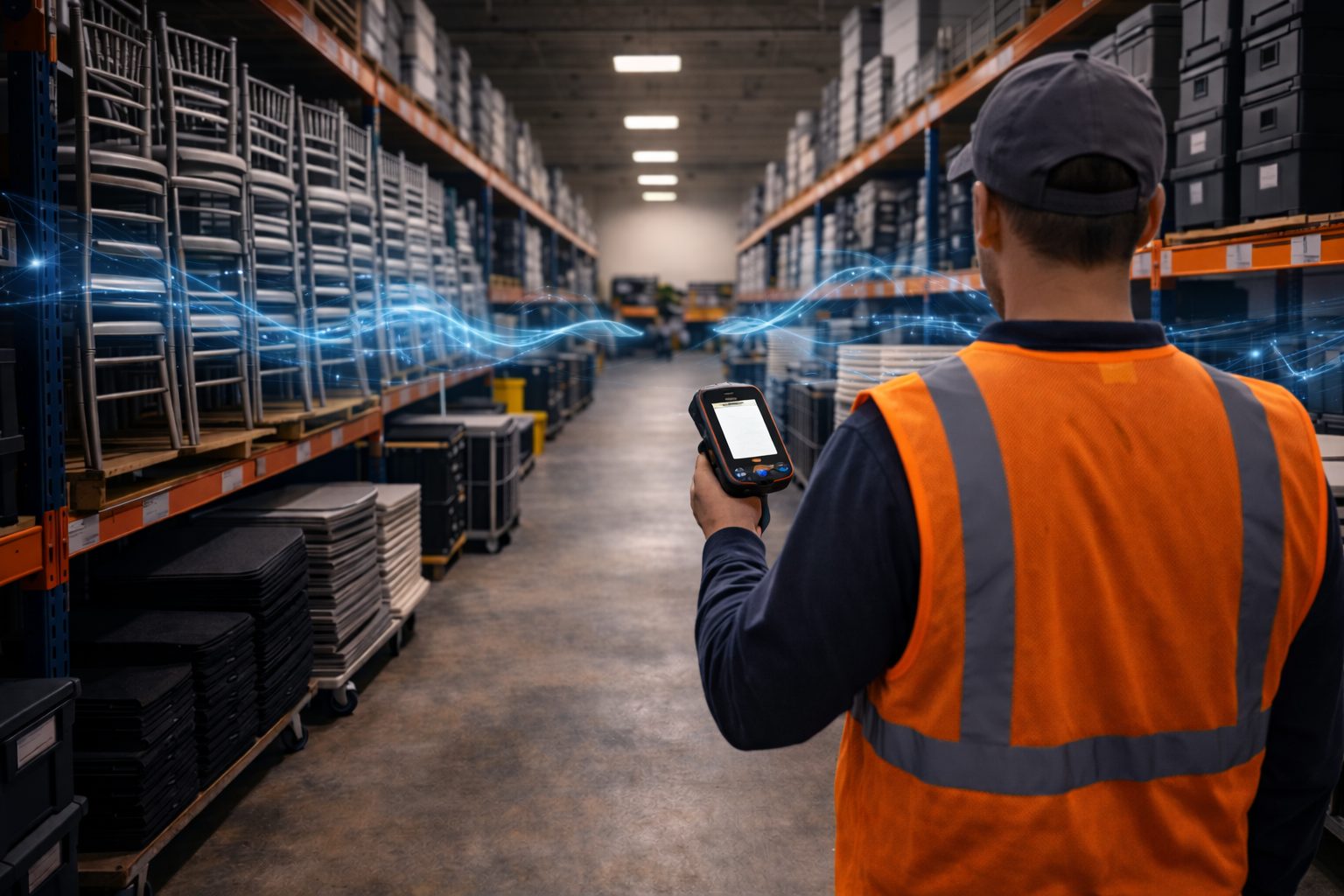
In rental warehouses, this means staff do not need to handle every item to verify it. For example, a scanner can detect RFID tags on linens in a cart, tools in a bin, or chairs stacked on a rack.
This ability to scan items without direct visibility makes loadouts, returns, and warehouse inventory checks much faster. Teams can confirm what equipment is present without stopping to reposition items or search for a visible barcode label.
How Does RFID Handle Missing Rental Inventory?
Every RFID tag has a unique identifier. When a scanner reads a group of items, it records the IDs of all tags detected. The software then compares that list to the items that should be included in the kit, bundle, or order.
If the system expects five tagged items but detects only four, the software can immediately indicate that something is missing. Instead of manually checking each item in the bundle, the system highlights the discrepancy.
For example, imagine a rental bundle that includes:
- 25 champagne glasses
- 10 60” round linens
- 25 dinner plates
- 25 salad plates
- 25 napkins
- Utensils
If the scanner reads 25 champagne glasses, but only 9 60” round linens, the inventory system will show that one linen is missing before the rental leaves the warehouse or when it is returned.
An important thing to keep in mind, though, is that RFID can only detect items that have their own RFID tag. If components within a bundle are not individually tagged, the system can only confirm the items that are tagged.
For this reason, rental companies often tag individual tools, batteries and accessories, linen bundles or containers, and/or high-value components inside kits.
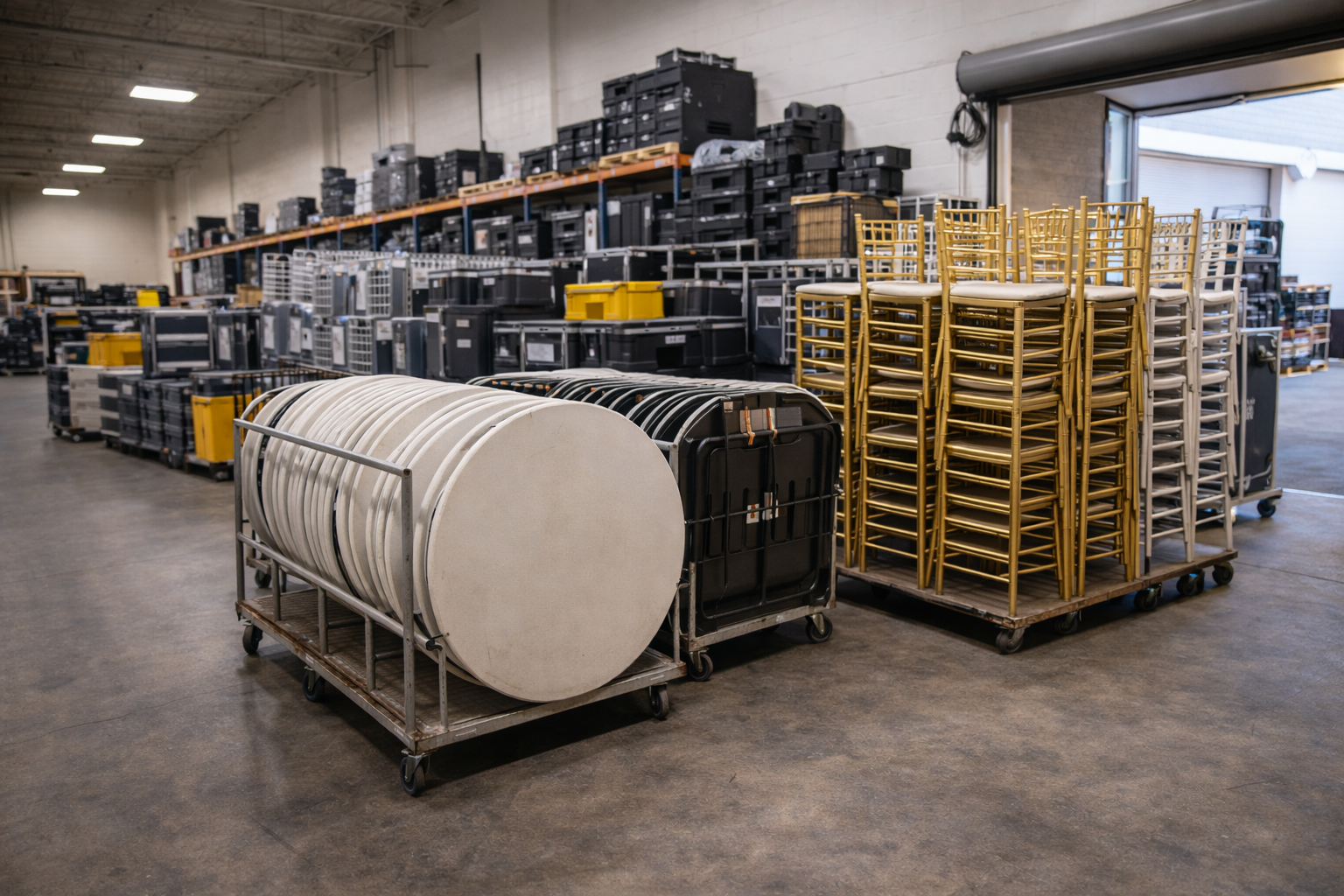
Can RFID Track Location?
RFID does not function like GPS. It cannot continuously track the exact real-time location of equipment across a city or job site.
Instead, RFID works by detecting when tagged items come within range of a scanner or reader. This allows rental businesses to confirm where inventory is at key points in their workflow, such as inside the warehouse, during loadout, or when equipment is returned.
What RFID Actually Tracks
RFID systems record inventory activity whenever a tag is detected by a reader. This allows rental businesses to track important moments in the lifecycle of their equipment.
- When an item passes a reader: If a tagged tool, linen bundle, or piece of equipment passes near an RFID scanner, the system records the item’s detection.
- When inventory enters or leaves a location: Rental warehouses can place scanners at doorways, loading docks, or check-in areas to record when items move in or out of the building.
- Whether equipment is present in a specific area: Staff can scan racks, storage zones, or carts to confirm what equipment is currently present in that part of the warehouse.
How Rental Companies Use This
Rental businesses use RFID detection points to improve inventory accuracy and speed up warehouse operations.
- Validate loadouts: Before a truck leaves, staff can scan the loadout area to confirm the correct equipment is being sent to the job.
- Check returns quickly: When equipment comes back from a rental, scanning the return area helps confirm what items have been returned.
- Confirm equipment within a warehouse zone: Teams can scan specific warehouse areas to verify that tools, linens, and other inventory are stored where they should be.

What Is an RFID Equipment Tracking System?
An RFID equipment tracking system combines hardware and software to automatically record inventory activity. Instead of manually scanning or counting items, RFID systems detect tagged equipment and send that information directly to an inventory platform.
For rental businesses, this creates a centralized system that records when equipment is scanned, where it was detected, and how it affects inventory availability.
Core Components of an RFID Tracking System
An RFID tracking system typically includes four main elements:
- RFID tags attached to inventory
- Fixed or handheld RFID readers
- Rental management software
- Integration between scanners and inventory records
The hardware captures tag signals, while the software interprets the scans and automatically updates inventory records.

Signs You May Need RFID Scanning for Your Rental Business
RFID is not necessary for every rental business. However, certain operational challenges often signal that RFID could significantly improve inventory tracking and warehouse efficiency.
- Large inventory volume: If your warehouse manages hundreds or thousands of items, manual counting and barcode scanning can quickly become time-consuming and difficult to maintain accurately.
- Frequent counting errors: If inventory counts regularly come up short or do not match what the system says should be available, RFID can help reduce human error by automatically detecting tagged items.
- Slow warehouse operations: When loadouts, returns, or inventory audits take too long, RFID scanning can help teams verify large groups of equipment much faster.
- High-value equipment: Businesses renting expensive tools, machinery, or specialty event equipment often use RFID to improve visibility and reduce the risk of loss or theft.
If these challenges sound familiar, RFID may be worth exploring to improve inventory accuracy and streamline warehouse operations.

RFID and Rental Software
RFID hardware can detect and scan inventory, but the real value comes from the software that interprets those scans. Rental software connects RFID readers to inventory records, orders, and warehouse workflows, making the data actionable.
What to Look for in an RFID-Compatible Rental Platform
- Inventory tracking integration
- Mobile scanning support
- Warehouse visibility
- Automated check-in and check-out
How TapGoods Delivers The Best-in-Class RFID Integration
Many modern rental platforms support RFID scanning, but the real difference lies in how efficiently the system processes that data. Speed, accuracy, and inventory visibility all depend on how well RFID scans integrate with the rental software itself.
TapGoods integrates with Easy RFID Pro, an RFID execution platform designed specifically for rental operations. While many RFID systems are built for retail or warehouse inventory, Easy RFID Pro supports rental workflows, including delivery verification, warehouse cycle counts, and high-volume inventory returns.
Together, TapGoods and Easy RFID Pro allow rental companies to scan hundreds of items in seconds while automatically updating inventory records and order status.
Key advantages include:
- Built for high-volume warehouse scanning: TapGoods combines with Easy RFID Pro’s scanning hardware to enable teams to process large batches of tagged equipment quickly, making loadouts, returns, and inventory checks much faster.
- Clean interface for warehouse workflows: TapGoods presents RFID scan results through a simple, intuitive interface so warehouse teams can quickly confirm loadouts, verify returns, and identify missing items.
- Clear operational visibility: RFID scans are tied directly to orders, inventory records, and warehouse workflows, giving teams a real-time view of what equipment is in the warehouse, on rent, or ready for the next job.
For rental businesses managing large equipment fleets or high-volume event inventory, this tight integration between RFID hardware and rental software can significantly improve warehouse efficiency.

How Much Does RFID Cost for Rental Businesses?
RFID systems are now more accessible than many rental businesses expect. Platforms like Easy RFID Pro offer plans designed specifically for rental operations, with pricing that scales based on inventory size and hardware needs.
Compared with many RFID deployments that cost tens of thousands or even hundreds of thousands of dollars, systems like Easy RFID Pro make RFID accessible for rental businesses.
Monthly software plans start around $79–$109 per month for your first device, with larger plans supporting thousands of tagged items.
You can explore the full pricing breakdown on the Easy RFID Pro website.

Streamline Your Rental Operations With RFID Scanning
RFID is quickly becoming an important tool for rental businesses that want faster warehouse operations and more accurate inventory tracking.
By tagging equipment and connecting scanners to rental software, companies can reduce manual counting, verify loadouts quickly, and maintain better visibility into their inventory. When paired with a platform like TapGoods and integrated with Easy RFID Pro, RFID becomes a powerful system for managing equipment at scale.
If you’re exploring RFID for your rental business, schedule a demo with TapGoods to see how RFID scanning works in real warehouse workflows.
Frequently Asked Questions
RFID is used in equipment rental businesses to track inventory more efficiently. By attaching RFID tags to tools or rental items, staff can scan large groups of equipment at once and instantly confirm what is in stock, what is on a truck, and what has been returned.
RFID can help identify where equipment was last scanned, but it does not function like GPS tracking. Instead of continuously tracking an item’s movement, RFID works by detecting tagged items when they pass near an RFID reader.
RFID and barcodes serve similar purposes but work differently.
Barcodes require a direct line of sight and must be scanned one item at a time. RFID can scan many tagged items simultaneously without needing to see each tag.
Because of this, RFID is often better suited to high-volume inventory such as linens, small tools, or bulk equipment. However, barcode systems are usually less expensive and work well for smaller inventories.
Many rental businesses use barcodes for most items and RFID for large quantities of inventory that are time-consuming to count manually.
The cost of an RFID system varies depending on the size of the business and the type of equipment being tracked.
Typical costs may include:
-
RFID tags for each item
-
Handheld or fixed RFID readers
-
Software that records and manages scan data
Small implementations may cost a few thousand dollars, while larger warehouse systems with multiple readers and thousands of tags can cost significantly more.
Most RFID tags used in rental operations do not require batteries. These are called passive RFID tags, and they receive power from the RFID reader’s signal during a scan.
Because they do not have batteries, passive RFID tags are small, durable, and can last for many years.
There are also active RFID tags that contain batteries and can transmit signals over longer distances, but these are typically used for specialized tracking applications rather than everyday rental inventory.