Poorly planned routes can lead to wasted miles, missed delivery windows, and drivers spending more time on the road than necessary. As delivery volumes increase, these inefficiencies become increasingly expensive and difficult to manage.
The good news is that effective delivery route planning doesn’t have to be complicated. By following a structured process and using the right tools, businesses can reduce travel time, improve resource utilization, and complete more deliveries with the same fleet.
In this guide, we’ll walk through how delivery route planning works, the steps involved in building efficient routes, common mistakes to avoid, and the tools businesses use to streamline the process.
Table of Contents
What Is Delivery Route Planning?
Delivery route planning is the process of organizing delivery stops, pickup locations, vehicles, drivers, and delivery windows into the most efficient schedule possible.
Unlike standard delivery businesses, rental companies often have to plan both deliveries and pickups. A single route may include:
- Dropping off event rentals
- Picking up returned equipment
- Handling same-day order changes
- Making sure items are back at the warehouse before the next reservation
This means that rental businesses are striking a fine balance of timing deliveries without wasting fuel, overloading vehicles, or causing unnecessary delays for drivers.
Why Is Efficient Delivery Route Planning Essential?
A recent industry survey found that 22% of businesses attribute significant revenue loss directly to inefficient delivery logistics. Planning efficient routes for your delivery drivers involves crafting a comprehensive plan that goes beyond simply delivering your orders on time.
A business that excels at route planning considers various factors that contribute to a seamless delivery experience. This means you should consider factors such as driver confusion, the time and distance between stops, load times, traffic conditions, and more.

How to Plan an Efficient Delivery Route
The difference between an efficient route and a poorly planned one can mean hours of extra drive time, higher operating costs, and missed deliveries.
Follow these steps to organize deliveries, pickups, vehicles, and crews into the most efficient routes possible.
Step 1: Review the Day’s Deliveries and Pickups
Gather all scheduled deliveries, pickups, exchanges, and service calls for the day. Verify addresses, delivery windows, contact information, and any special requirements such as setup crews, venue restrictions, or loading instructions. Accurate order data is the foundation of efficient route planning.
Step 2: Prioritize Time-Sensitive Stops
Identify deliveries and pickups that must occur within specific time windows. Event setups, venue deliveries, and VIP customers often require stricter scheduling than standard pickups. Establishing priorities early helps prevent scheduling conflicts later in the planning process.
Step 3: Group Stops by Geographic Area
Organize deliveries and pickups that are located near one another. Clustering nearby stops reduces travel time, fuel costs, and vehicle wear while making routes easier to manage throughout the day.
Step 4: Use AI to Sequence Stops Efficiently
Once stops have been grouped and resources have been assigned, AI can help determine the most efficient order for deliveries and pickups. You can use an AI model like ChatGPT, Claude, or Grok to analyze factors such as travel distance, delivery windows, vehicle capacity, and route constraints. AI can recommend stop sequences that minimize drive time and maximize productivity.
For rental businesses, AI can be particularly useful when balancing both deliveries and pickups on the same route. Instead of manually deciding which stop should come next, dispatchers can use AI to identify the most efficient route while still accounting for operational requirements and customer commitments.
Step 5: Review Routes for Real-World Conditions
Before finalizing routes, consider factors that AI may not fully understand, such as venue access limitations, known traffic patterns, weather conditions, construction zones, or customer-specific requirements. Human review helps ensure routes are practical as well as efficient. If you catch any issues, you can include these conditions in your next prompt to ensure future routes are optimized for known factors!
Step 6: Assign Vehicles and Crews
Match routes to the appropriate trucks, trailers, and personnel based on inventory volume, vehicle capacity, crew requirements, and route complexity.
Your rental software should make this process easy by allowing you to view scheduled deliveries, available vehicles, crew assignments, and inventory requirements all in one place, helping dispatchers build routes with confidence.
Step 7: Communicate Routes to Drivers
Provide drivers and crews with route details, delivery instructions, customer contacts, and any special setup or pickup requirements. Clear communication helps reduce delays and improves the customer experience.
Tip: Use Google Maps for Delivery Route Planning
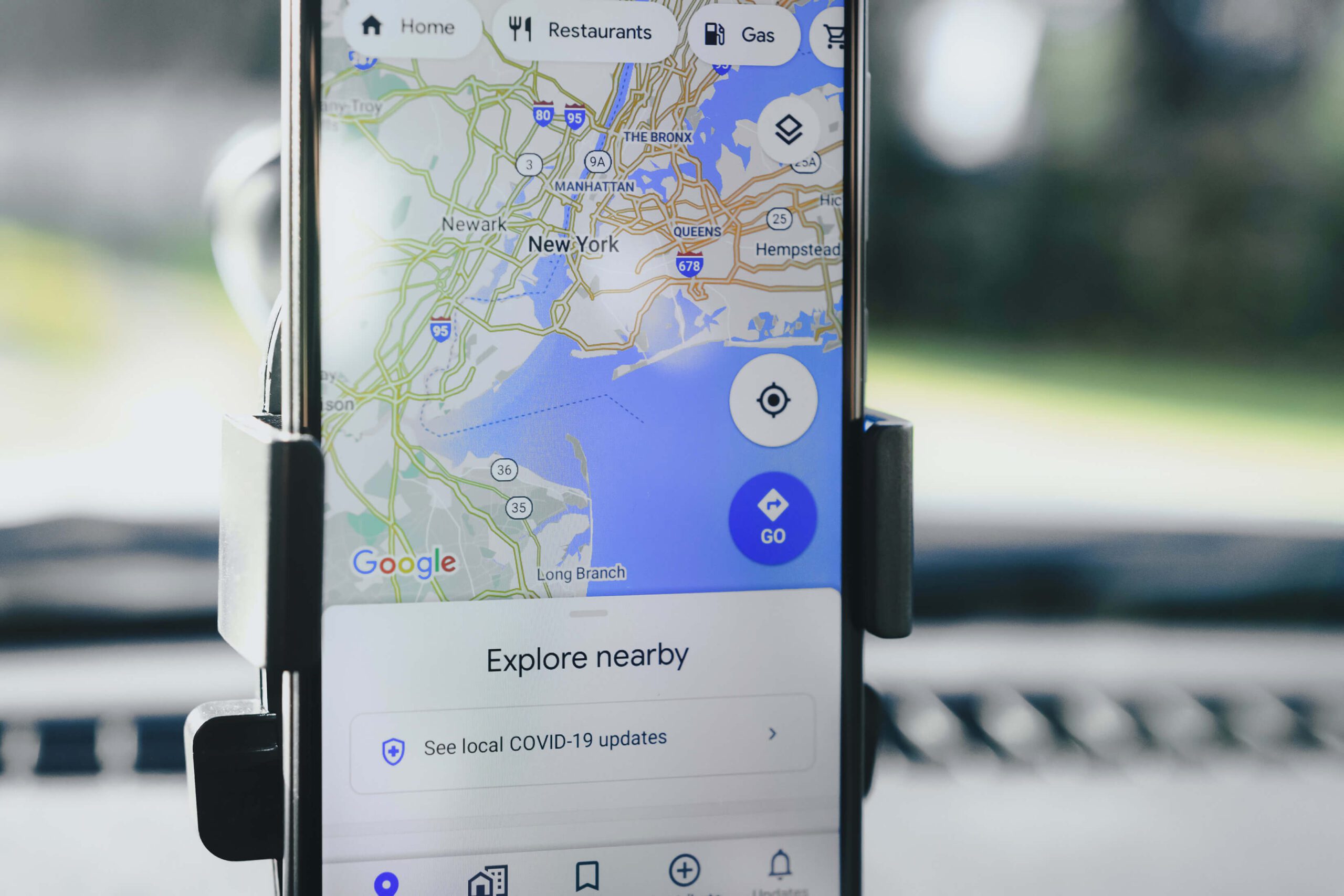
When considering your route delivery optimization strategy, Google Maps will be your best friend. Incorporating Google Maps into your route delivery optimization strategy amplifies your ability to plan, navigate, and execute deliveries with unparalleled precision. The combination of essential metrics and real-time insights equips you to overcome challenges, minimize delays, and elevate customer satisfaction. And, it’s free!
With this tool, you can effortlessly track the following data:
- Distance Insights: Calculate the precise distance between stops with ease. This invaluable information enables accurate route planning, contributing to efficient resource allocation.
- Estimated Drive Time: Accurately gauge the approximate time required to reach each location. You can utilize tools such as Google Maps to estimate the time it will take your driver to travel between each stop.
- Speed Limit: Stay informed about speed limits along the routes. Adhering to these limits not only ensures safety but also plays a pivotal role in maintaining an efficient route execution process.
- Real-Time Traffic Updates: Access up-to-the-minute traffic condition updates. Armed with this real-time data, you can dynamically adjust your routes to circumvent congestion, unexpected delays, and potential roadblocks.
You can combine the power of Google Maps with Automation by investing in software compatible with it. This way, you can experience all of the perks of reducing manual labor while benefiting from all of the real-time data tracking tools that Google Maps provides!
Common Delivery Route Planning Challenges for Rental Businesses
Even when businesses follow a structured route planning process, challenges can arise that impact efficiency, increase costs, and disrupt delivery schedules.
Understanding these common challenges and how to address them can help businesses build more reliable routes and keep operations running smoothly.
Last-Minute Order Changes
Last-minute order changes can force dispatchers to rebuild routes, reassign vehicles, and adjust crew schedules on short notice.
How to address it: Build flexibility into your routes by leaving buffer time between stops and maintaining visibility into vehicle and crew availability. Centralizing order updates in your rental software can also help teams quickly identify how schedule changes impact the rest of the day’s deliveries.
Balancing Deliveries and Pickups
Coordinating both deliveries and pickups on the same route can create inefficiencies if stops are not properly sequenced.
How to address it: Use route planning tools or AI-assisted planning to identify opportunities to combine deliveries and pickups within the same geographic area. Planning pickups along return routes can help reduce unnecessary mileage.
Vehicle Capacity Constraints
An efficient route becomes ineffective if the assigned vehicle cannot accommodate the required inventory.
How to address it: Verify the inventory volume and vehicle capacity before finalizing routes. Rental software that tracks vehicle assignments and inventory requirements can help prevent overloading and scheduling conflicts.
Traffic and Unexpected Delays
Accidents, construction, weather, and event traffic can impact delivery schedules throughout the day.
How to address it: Review local conditions before dispatch and build reasonable buffer time into routes. Monitoring route performance over time can also help identify recurring delays and improve future planning.
Managing Delivery Windows
Meeting multiple customer delivery windows while maximizing route efficiency can be challenging.
How to address it: Prioritize time-sensitive stops and use AI or route-planning tools to optimize stop sequencing to meet required delivery windows.
Maintaining Inventory Availability
Delays in pickups can prevent inventory from being prepared for future reservations.
How to address it: Coordinate delivery schedules with inventory availability and return timelines. Keeping deliveries, pickups, inventory, and scheduling data in one system can help teams avoid bottlenecks and improve asset utilization.
How The Right Rental Software Simplifies Delivery Route Planning
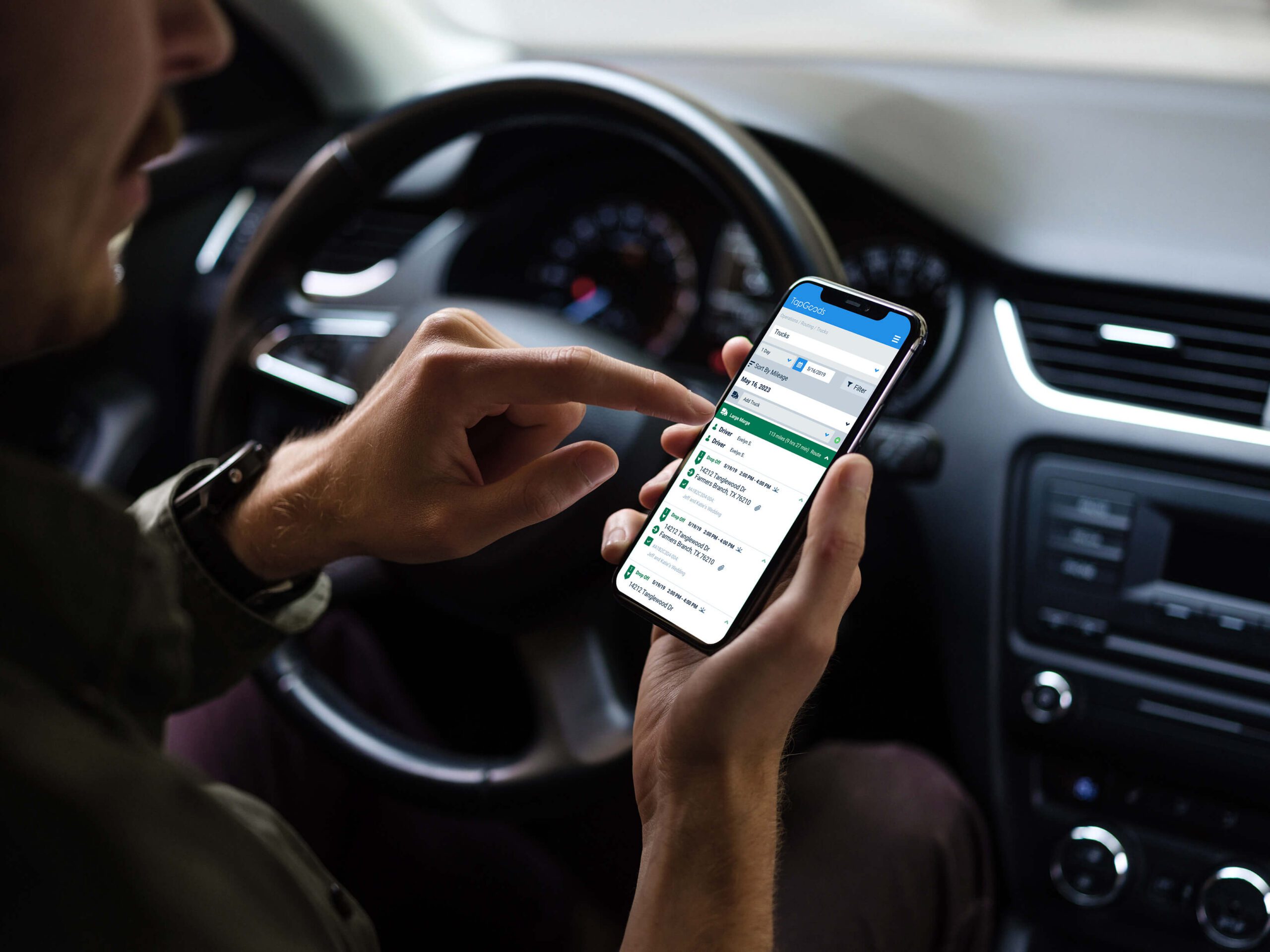
Delivery route planning becomes easier when orders, inventory, vehicles, crews, and delivery schedules are managed in the same system. Instead of switching between spreadsheets, maps, calendars, and customer messages, rental businesses can use rental software to centralize the information dispatchers need to build efficient routes.
The right platform should make it easier to see what needs to be delivered, where each order is going, which vehicles and crews are available, and how pickups fit into the day’s schedule.
Below are some of the most important routing features to look for when choosing rental software.
Truck Management: The ability to add and manage different trucks on the platform ensures that the right vehicles and trailers are assigned to specific deliveries, optimizing resources and capacity.
Stop Organization and Scheduling: Efficiently organizing stops and scheduling deliveries is vital for timely and well-coordinated operations.
Delivery Team Collaboration: The software should allow for the addition of delivery team members, promoting collaboration and real-time communication among team members.
Printable Picklists and Delivery Manifests: The availability of printable picklists and delivery manifests facilitates smooth handoffs and ensures that all necessary items are accounted for and in good condition.
Integration with Google Maps: Seamlessly incorporating Google Maps functionality into the delivery route planner enhances navigation precision. This integration provides real-time traffic updates and accurate directions, enabling drivers to navigate the most optimal routes, avoid congestion, and ensure on-time deliveries.
Delivery Fee Calculation: This feature takes into account various factors such as distance, delivery windows, and specific fees associated with different routes. Whether it’s calculating fees based on location, order size, or other variables, the delivery fee calculation feature ensures transparency and consistency in every transaction.
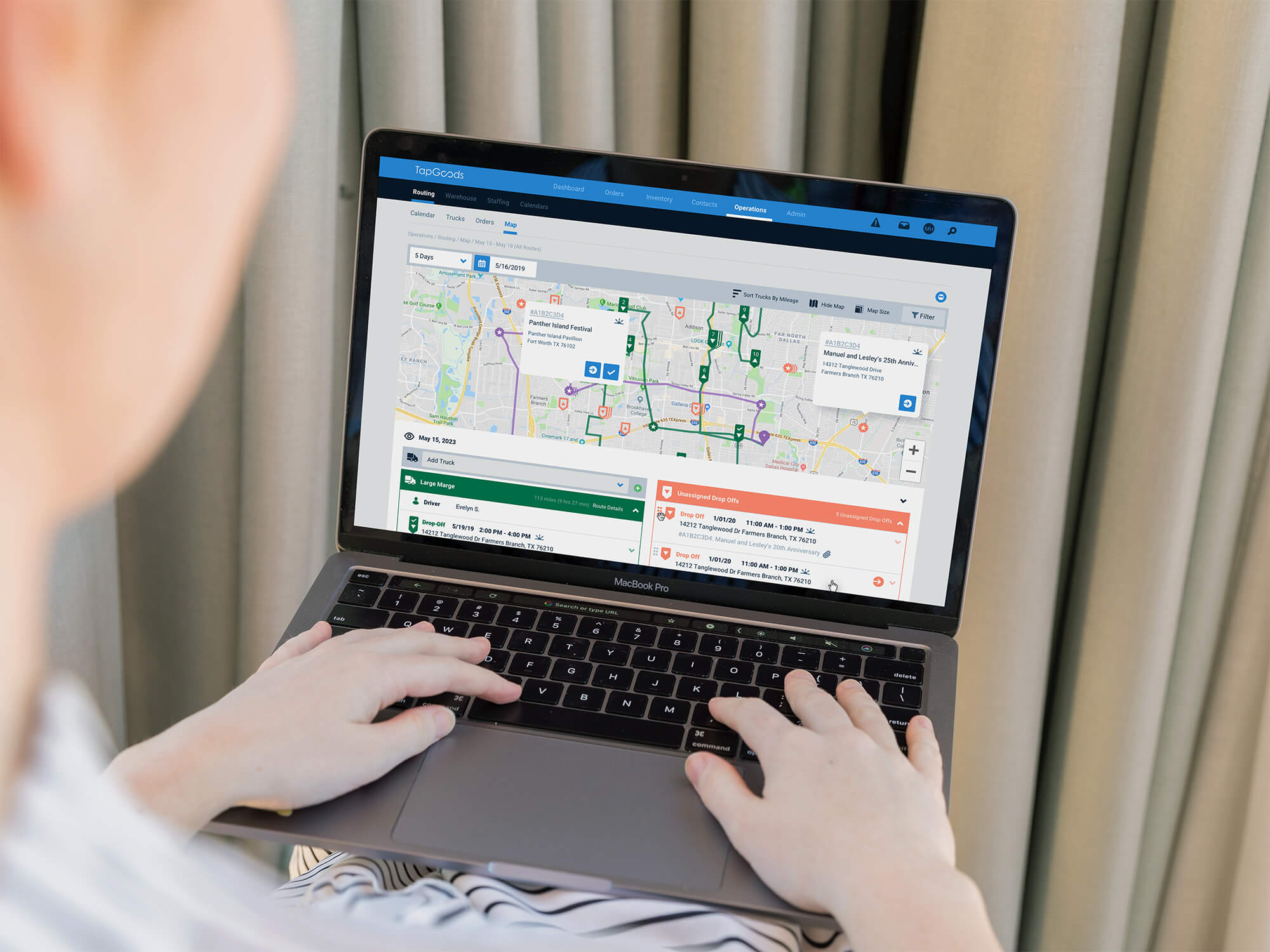
Why Rental Businesses Choose TapGoods PRO for Routing & Inventory Management
The best delivery route planning software for rental businesses helps your entire operation run more efficiently.
TapGoods PRO was built specifically for rental businesses, giving teams the tools they need to coordinate deliveries, manage inventory, assign crews, and keep schedules on track from a single platform.
- Powerful Routing Tools: Plan deliveries and pickups, assign vehicles and crews, and keep routes organized with tools designed specifically for rental operations.
- Easy-to-Use Software: Spend less time training staff and more time getting work done with an intuitive platform built to simplify day-to-day operations.
- Award-Winning Customer Support: Work with a team that understands the rental industry and is committed to helping your business succeed every step of the way.
- Built for Rental Businesses: Manage orders, inventory, deliveries, pickups, vehicles, and crews in one centralized system instead of relying on disconnected tools.
- Scales With Your Growth: Whether you’re managing a few daily deliveries or operating across multiple locations, TapGoods PRO can grow alongside your business.
When your routing, scheduling, inventory, and delivery operations are connected, planning efficient delivery routes becomes significantly easier.

Turn Delivery Route Planning Into a Competitive Advantage
Efficient delivery route planning can help rental businesses reduce costs, improve on-time performance, maximize vehicle utilization, and create better customer experiences. By following a structured planning process and leveraging the right tools, businesses can build more efficient routes while minimizing the operational challenges of managing deliveries and pickups.
If you’re ready to simplify delivery route planning and manage your deliveries, inventory, vehicles, and crews from one platform, schedule a demo with TapGoods PRO. Our easy-to-use software and award-winning support team can help you streamline operations and scale your business with confidence.
Frequently Asked Questions
Delivery route planning is the process of organizing deliveries and pickups into the most efficient route possible. It involves considering factors such as delivery windows, stop locations, vehicle capacity, driver availability, and traffic conditions to reduce travel time and operating costs while improving on-time performance.
Delivery route planning focuses on creating routes and assigning resources for scheduled deliveries and pickups. Route optimization takes that process a step further by analyzing factors such as distance, traffic, vehicle capacity, and delivery windows to determine the most efficient route sequence.
Most rental businesses start by reviewing scheduled deliveries and pickups, prioritizing time-sensitive orders, grouping stops by geographic area, assigning vehicles and crews, and sequencing stops for efficiency. Many businesses also use software to simplify scheduling, resource allocation, and route management.
Several factors can impact route efficiency, including delivery windows, traffic conditions, vehicle capacity, crew availability, inventory requirements, stop locations, and last-minute schedule changes. Successful route planning accounts for these variables before routes are finalized.
Yes. AI can help businesses organize stops, identify scheduling conflicts, recommend efficient stop sequences, and improve route planning decisions. While human oversight is still important, AI can significantly reduce the time required to build and adjust delivery routes.
Rental software can simplify route planning by centralizing orders, inventory, deliveries, pickups, vehicle assignments, and crew schedules in a single platform. This gives dispatchers better visibility into daily operations and helps reduce manual planning efforts.
Effective delivery route planning can help businesses reduce fuel costs, improve on-time delivery rates, increase the number of stops completed per day, and make better use of vehicles and staff. Efficient routes also contribute to a better customer experience.
Rental businesses should look for software that goes beyond basic route planning. For example, TapGoods PRO combines delivery management, inventory tracking, vehicle assignments, crew scheduling, and routing tools in one easy-to-use system. This allows rental businesses to build more efficient routes, reduce manual work, and keep operations running smoothly as they grow.