Discovering that rental equipment has been stolen is one of the most stressful situations a rental business can face. Whether equipment disappears from a job site, is never returned, or is taken through a fraudulent rental, the next steps matter.
This guide explains exactly what to do when rental equipment is discovered to be stolen, from immediate actions and reporting to documentation and operational follow-up, so you can respond quickly without creating additional problems.

Table of Contents
Stolen Rental Equipment? Start With These 3 Steps
According to the American Rental Association (ARA), equipment theft costs the rental industry around $100 million every year, with hundreds of pieces of equipment going missing each month. Acting quickly and following a clear process can make a meaningful difference.
If rental equipment is discovered to be stolen, start with the following steps:
Step 1: Confirm the Equipment is Truly Missing
Start by confirming that the equipment is truly missing:
- Check open rental contracts, transfers, and pending returns
- Verify the equipment was not moved internally or delivered to another location
- Confirm scheduled return dates and delivery confirmations
Once confirmed:
- Flag the item in your inventory system so it is clearly marked as missing or under investigation
- Pause future reservations for similar equipment if availability may be impacted
- Preserve all records, communications, and customer details exactly as they are
Strong inventory visibility makes this process significantly easier. When teams rely on spreadsheets or memory, valuable time is often lost.

Step 2: Report the Theft (Police, Insurance, Internal Records)
Reporting stolen equipment quickly and in the correct order helps protect recovery efforts and insurance claims.
File a Police Report
Contact local law enforcement as soon as rental equipment is confirmed stolen.
Be prepared to provide:
- Equipment descriptions and serial numbers
- Photos, if available
- Last known location
- Date and time the equipment was last accounted for
- Customer or renter information tied to the rental contract
Request and record the police report number, which will be required for insurance and internal documentation.
Notify Your Insurance Carrier
Contact your insurance provider promptly and confirm the required documentation before submitting a claim. Most insurers will request:
- The police report number
- Rental contracts
- Proof of ownership
- Equipment details and estimated value
Incomplete or delayed documentation can slow the claims process.
Update Internal Records
Internally, ensure that:
- Inventory status is updated immediately
- The associated customer and contract are flagged
- The incident is logged with clear, time-stamped notes
Clear internal documentation reduces confusion and prevents duplicate work.

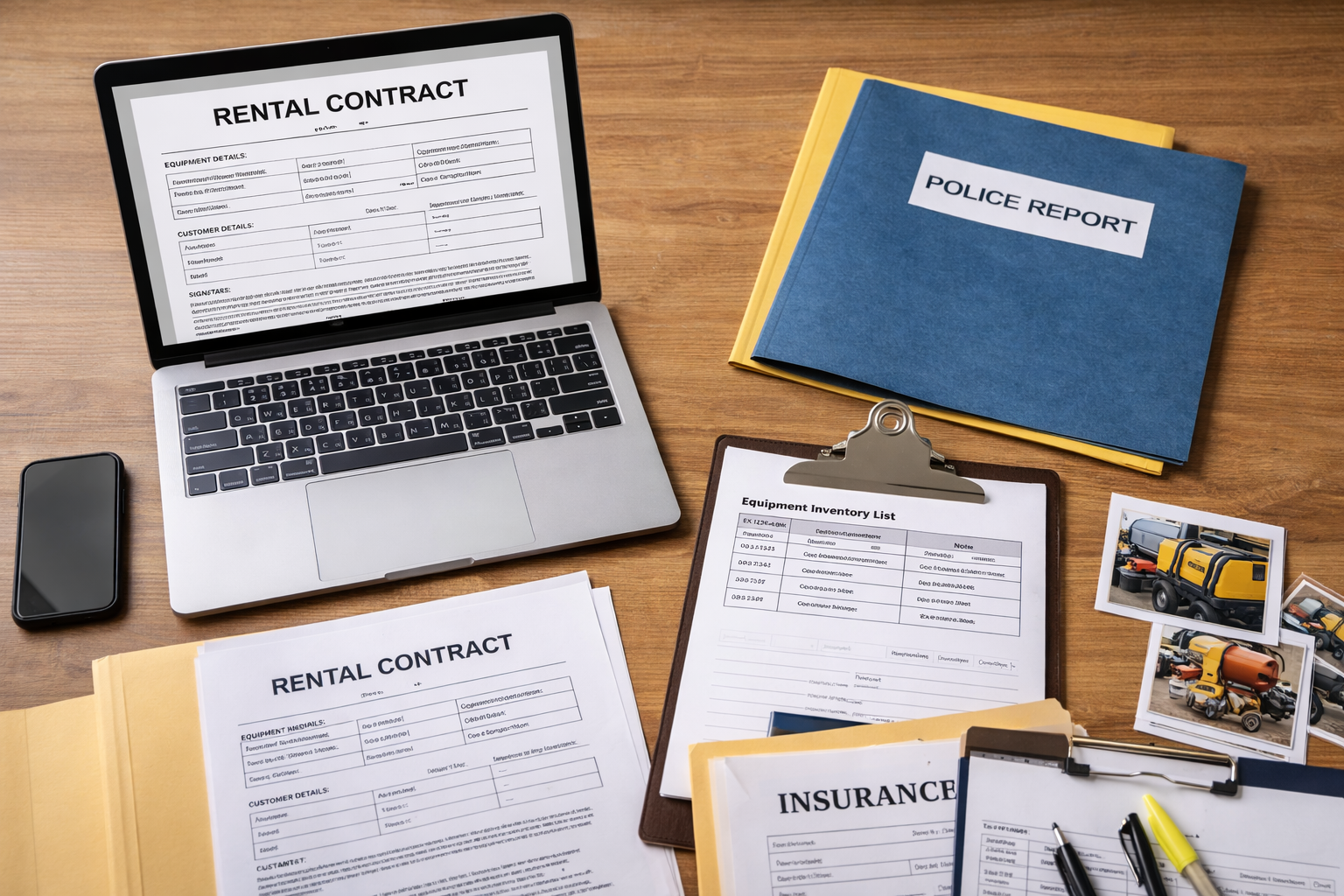
Step 3: Prepare Documentation
When rental equipment is discovered to be stolen, missing paperwork is one of the biggest sources of delay.
Prepare the following documentation:
- Rental contracts or agreements
- Customer identification and contact details
- Equipment serial numbers and descriptions
- Photos of the equipment, if available
- Inventory movement or rental history
- Delivery and pickup records
- Police report number
- Insurance correspondence
Digital contracts and centralized customer records significantly reduce stress during this stage.
Common Mistakes to Avoid After Rental Equipment Is Stolen
Even experienced rental teams can make mistakes under pressure. Common issues include:
- Delaying the police report
- Modifying contracts or records after the incident
- Relying on memory instead of system records
- Failing to flag the customer internally
- Skipping a review of how the theft occurred
Avoiding these mistakes helps protect insurance claims and reduce the risk of repeat risk.

How Equipment Rental Theft Impacts Your Business
Equipment rental theft affects far more than the loss of a single asset.
Common impacts include:
- Lost rental revenue and reduced utilization
- Staff time spent on reporting and follow-up
- Insurance deductibles and premium increases
- Reduced equipment availability for future customers
- Increased margin pressure, especially for lean teams
ARA estimates that equipment rental theft costs the industry approximately $100 million annually, reinforcing that theft is an ongoing operational risk, not a rare exception.
How to Reduce Risk After a Theft Occurs
Once the immediate response is complete, the focus should shift to preventing repeat incidents.
Post-incident reviews often uncover:
- Gaps in renter verification
- Inconsistent checkout or return workflows
- Unclear contract language regarding responsibility
- Limited visibility into asset status
- Breakdowns in internal communication
Addressing these areas strengthens operations without placing blame on staff.
For more on increasing efficiency in your warehouse, check out our complete guide for tool and equipment!

Tools That Help Track, Document, and Respond to Stolen Rental Equipment
While no system can guarantee recovery, the right tools can dramatically improve response speed and documentation quality.
Helpful tools include:
- Inventory management systems with serial tracking
- Digital rental contracts connected to customer records
- Audit trails showing who rented what and when
- Centralized reporting and documentation tools
- Optional GPS or tracking hardware for high-value assets
The goal is clarity and accountability when incidents occur.
Managing Stolen Rental Equipment: How TapGoods Supports Rental Teams
When rental equipment has been stolen, the biggest challenges are usually visibility, documentation, and coordination.
TapGoods helps rental businesses respond more effectively by:
- Centralizing inventory records and asset history
- Linking digital rental contracts directly to customers
- Maintaining clear audit trails for police and insurance
- Providing shared visibility across teams
- Supporting lean operations without adding manual work
Instead of scrambling across spreadsheets and emails, teams can work from a single, reliable source of truth.
See How TapGoods Supports Rental Operations
Theft incidents often reveal operational weak points. Having the right systems in place helps rental businesses respond faster and reduce future risk.
If your team is reviewing processes after rental equipment has been stolen, seeing how TapGoods centralizes inventory, contracts, and customer records can help you prepare for what comes next.
Book a TapGoods demo below to see how it supports rental operations when it matters most.
Frequently Asked Questions
File a police report immediately once the equipment is confirmed missing. Provide serial numbers, photos, rental contracts, last known location, and customer information. Request the official report number for insurance documentation.
Most rental businesses rely on inland marine or commercial property insurance policies that include theft coverage. Coverage depends on policy limits, deductibles, and exclusions. Always verify terms with your insurance provider.
Contact your insurer after filing a police report.
Have ready:
-
Police report number
-
Proof of ownership
-
Rental contract
-
Equipment value and serial numbers
-
Communication records
Complete documentation speeds approval.
If equipment is not returned:
-
Document attempted contact.
-
Send a formal written notice.
-
Follow your contract’s non-return clause.
-
Escalate to law enforcement if necessary.
Clear contract language is critical in these cases.
If your rental agreement assigns responsibility for loss or theft, renters may be liable for replacement value. Enforcement depends on contract terms and jurisdiction.
Equipment theft may be charged as criminal theft or fraud, depending on the situation. Value thresholds determine whether charges are misdemeanor or felony. Intent and documentation play a major role.
Typically required:
-
Rental agreement
-
Customer identification
-
Serial numbers
-
Photos
-
Police report
-
Proof of ownership
If you have digital records, this simplifies the process significantly.
High-value, easily resold items are most frequently targeted, including:
-
Compact construction equipment
-
Generators
-
Power tools
-
Audio/visual equipment
Serial tracking reduces risk.
Prevention strategies include:
-
Identity verification prior to rentals
-
Clear theft clauses in rental agreements
-
Serial number tracking
-
Structured check-in/check-out workflows that keep track of inventory accurately
While these strategies cannot actively prevent a perpetrator from stealing, they make it much easier to act on a theft.