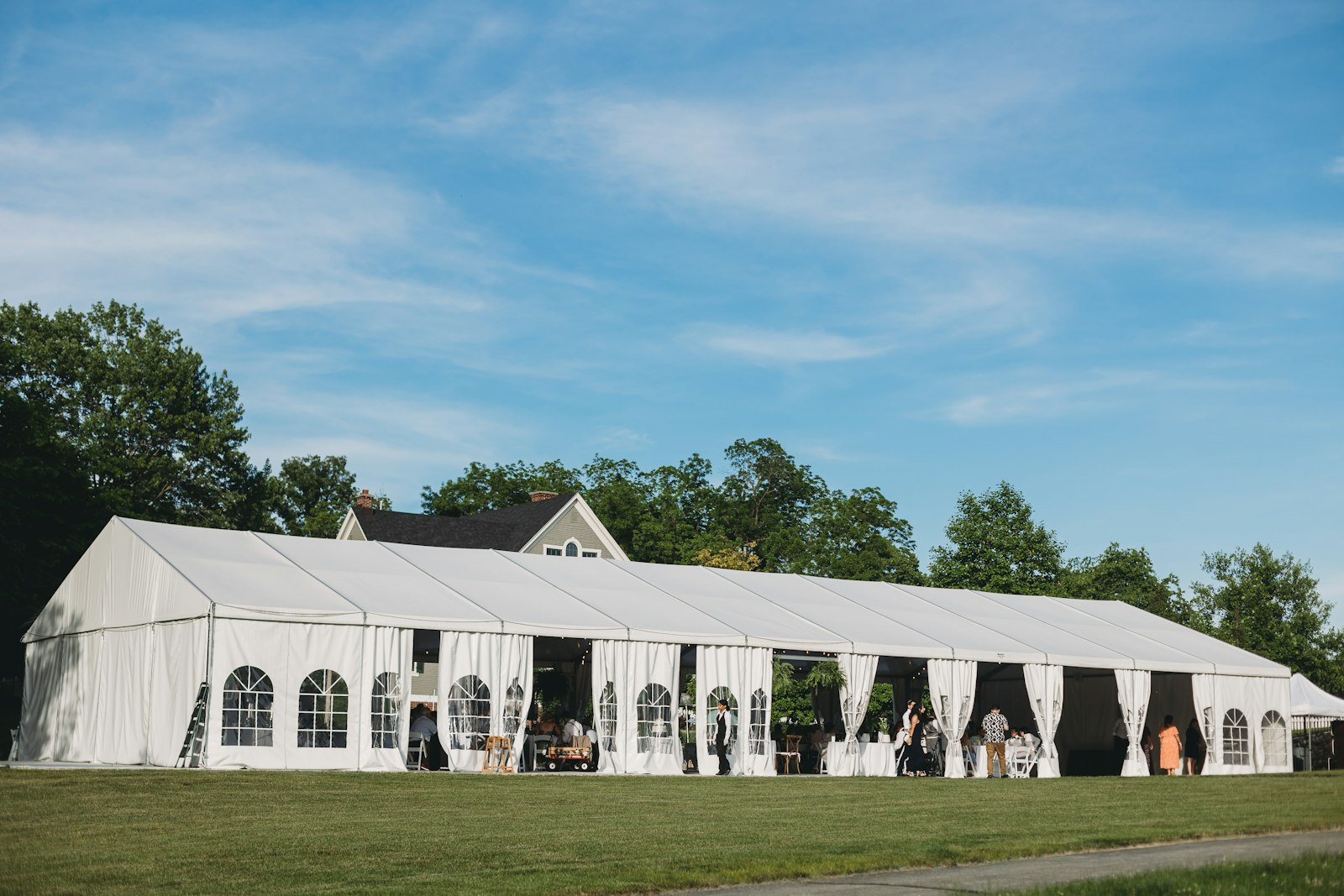
If you’re working out how to start a party rental business, two questions usually come first: where do you begin, and how much money do you need? There’s a lot to line up before your first booking, from inventory and insurance to pricing and payments.
This guide breaks it into six steps that also work for an event rental business: test local demand, write a one-page plan, register and insure the business, buy one starter package, price it, and set up online booking and payments.
Table of Contents
How Much Does It Cost to Start a Party Rental Business?
Your startup cost depends mostly on two decisions: how big an event you want to serve, and how you’ll get the rentals there. A few tables and chairs that fit in your own vehicle cost a few hundred dollars. Adding tents, a trailer or truck, and a crew pushes the total into the tens of thousands.
The table below groups a first purchase into three budgets. The backyard starter runs out of your garage, the weekend business can outfit a tented party of about 100 guests, and the full-service company has a truck and a crew. Each row lists the inventory, its cost from the supplier listings below, and the other expenses to plan for:
| Tier | Inventory | Inventory cost | Also budget for |
|---|---|---|---|
| Backyard starter | 3 six-foot tables, 20 chairs, optional 10×20 commercial pop-up canopy | ~$650 without the canopy, ~$2,650 with it | Registration and a liability policy; your own vehicle; garage storage |
| Weekend business | 12 eight-foot tables, 100 chairs, 12 tablecloths, a 20×40 pole or frame tent | ~$6,000–7,600 | A utility trailer, sales tax permit, insurance, booking software, starter marketing |
| Full service | Several larger tents, hundreds of chairs, staging or dance floor, decor | $30,000 and up | Box truck, storage unit or warehouse, commercial auto coverage, a crew |
The jump between tiers comes from tents and a vehicle: a commercial 20×40 frame tent costs more than 100 chairs and 12 tables combined.
The inventory costs below add up these per-unit prices from two commercial suppliers:
| Item | Listing | Price |
|---|---|---|
| Folding chair | Lancaster plastic folding chair, 10/case | $106.99 per case ($10.70 each) |
| 6 ft table | Lifetime 80126 professional-grade 6 ft table | $144.99 |
| 8 ft table + 8 chairs | Lancaster heavy-duty 8 ft table kit | $238.49 |
| 60″ round + 8 chairs | Lancaster heavy-duty 60″ round kit | $284.99 |
| Tablecloth | Oxford 90″ x 132″ polyester cover, 12/case | $248.99 per case ($20.75 each) |
| 10×20 pop-up canopy | Party Tents Direct 50mm Speedy Pop-up | $1,999.99 |
| 20×20 pole tent | Party Tents Direct Premium Pole Tent | $1,599.99 |
| 20×20 frame tent | Party Tents Direct High Peak Frame Tent | $2,399.99 |
| 20×40 pole tent | Party Tents Direct Premium Pole Tent | $2,799.99 |
| 20×40 frame tent | Party Tents Direct High Peak Frame Tent | $4,399.99 |
These are list prices before freight and sales tax, and they change, so get current quotes from two or three suppliers before you order.
For a real reference point, Michael Whitman started BW Party Supply in October 2022 with $30,000 of his own money. That bought two 20×20 tents, about 60 used tables, and 440 assorted chairs, and he ran it nights and weekends while working full time (read the interview).
Run each tent or truck purchase through the Event Rental ROI Calculator to see how many rentals pay it back.
Step 1: Validate Demand and Pick Your Niche
Before starting a party rental business, prove that people near you will pay for what you plan to rent. These three tests take an afternoon and cost nothing:
- Search your delivery radius. Look up “party rentals” and “tent rentals” on Google Maps and Facebook Marketplace within 20 to 30 miles, and note what each company carries.
- Ask for next-weekend availability. Call or message two or three local rental companies about a common order, like 10 tables and 60 chairs. A company that’s sold out is proof of demand.
- Ask venues and planners what they can’t get. Barn venues and parks often have no inventory of their own, and planners know which items are hard to book in peak months.
If the tests turn up empty shelves and booked-out competitors, you’ve found your opening. If the market is crowded, look for a niche nobody covers or a suburb the big companies skip.
Choose your niche before you buy anything, because what you stock first depends on who you rent to. Wedding rental businesses carry arches and altars, linens, chair covers, string lights, and higher-end tents, and can charge more per item.
Event and corporate rental businesses carry tables, chairs, tents, staging, and concession equipment for festivals and company events. Kids’ party rental businesses carry inflatables, small tents, and popcorn and snow cone machines. Our list of rental business ideas compares startup costs for several of them.
Step 2: Write a One-Page Business Plan
A 20-page plan can wait. Before you buy your first table or canopy, you need a handful of estimates that tell you whether the business could pay for itself:
- What you’ll rent
- What you’ll charge
- How many bookings you’d need each month to cover your costs
- Which months those bookings are likely to come in
Copy the table below into a Google Sheet or any spreadsheet you already open every week. Keep it to these eight numbers on one page. You’ll be the one quoting, loading, and delivering, and a short sheet is one you’ll actually keep up to date.
| # | Number | What to write down | Example |
|---|---|---|---|
| 1 | Niche and delivery radius | Who you serve and how far you’ll drive | Backyard parties and small weddings, 25 miles |
| 2 | Starter package | The set you expect to rent most weekends | 6 tables, 50 chairs, 20×20 canopy |
| 3 | Price per package | What one booking brings in before delivery | $350 |
| 4 | Delivery fee | Your flat fee and how it grows with distance | $75 within 10 miles, plus $3 per mile after |
| 5 | Estimated bookings per month | Your best guess for busy season, based on the demand you found in Step 1 | 8 |
| 6 | Break-even bookings per month | Bookings needed to cover your monthly costs | 3 |
| 7 | Storage and vehicle plan | Where inventory lives and what hauls it | Garage, plus a 6×12 trailer |
| 8 | Season calendar | The months you expect to be busy and slow | Busy spring through Thanksgiving, slow December through February |
The example numbers are placeholders to show the format, so swap in your own. You won’t have any orders yet, so number 5 is a forecast and number 6 is the bar it has to clear. To find number 6:
- Add up the monthly fixed costs you expect: insurance, storage, software, and loan payments.
- Divide that total by what you expect to keep from each booking after fuel and cleaning.
- Check the result against your slow months, because insurance and loan payments still come due December through February.
If your estimated busy-season bookings can’t also carry those months, you’d rather find that out on this sheet than in February.
Once bookings start, add a column for what really came in each month so your estimates turn into real numbers. If your first few weekends land below break-even, you’ll see it early enough to change your price or package before you buy more inventory.
Buying inventory in late winter and listing it before spring gives you the whole busy season to earn it back. Our guide to marketing a party rental business online for free covers getting found.
Step 3: Licenses, Permits, and Insurance
Do You Need a License to Start a Party Rental Business?
Usually not a party-rental-specific license. You do need to register the business, collect sales tax where rentals are taxable, and carry insurance, plus a few permits if you rent tents or inflatables or run the business from home.
Here’s the checklist, with who issues each item and why it matters:
| Item | Who issues it | Why you need it | Cost note |
|---|---|---|---|
| Business entity: LLC, or a DBA for a sole proprietorship using a trade name | Secretary of State (LLC); county or state (DBA) | An LLC separates your personal assets from the business if something goes wrong at an event | Filing fee varies by state and is listed on your Secretary of State’s site |
| EIN (Employer Identification Number) | IRS | Opening a business bank account, hiring, and filing taxes | Free from irs.gov |
| Sales tax permit | State revenue department | Rentals are taxable in many states, so you may need to collect tax from day one | Cost and wait time vary by state |
| Local business license | City or county | A general requirement to operate in most places | Varies |
| Home occupation permit or zoning approval | City or county | Needed if you store inventory or run the business from home | Varies; check HOA rules too |
| Tent or temporary structure permit | Local fire marshal or building department | Larger tents often need a permit and must meet fire code | Size threshold set by your local fire code |
| Inflatable (amusement device) registration or inspection | Your state, where regulated | Only if you rent bounce houses or other inflatables | Varies by state |
| General liability insurance, plus commercial auto | Your insurer | Many venues require a certificate of insurance (COI), proof of coverage, before you can deliver | Get quotes, and ask each venue what minimum it requires on the COI |
Start with your state’s business portal and your city or county clerk’s site. This checklist isn’t legal or tax advice, so confirm anything you’re unsure of with a local accountant or attorney. Before you take your first booking, compare carriers in our guide to party rental insurance options, and have a rental agreement ready for clients to sign, starting from our free party rental agreement template.
Step 4: Buy Your First Inventory
Buy the package that matches the demand you found in Step 1. It should be the setup you expect to rent every weekend. Then stop buying. Holding off on the rest keeps your cash free until real bookings show you what to add next. These three starter packages are priced from the supplier table above:
| Package | What’s in it | Approximate cost |
|---|---|---|
| 20-chair backyard | 3 six-foot tables ($435), 20 chairs ($214), a 10×20 commercial pop-up canopy ($2,000) | ~$650 without the canopy, ~$2,650 with it |
| 50-chair party | 6 six-foot tables ($870), 50 chairs ($535), a 12-pack of tablecloths ($249), a 20×20 pole tent ($1,600) or frame tent ($2,400) | ~$3,250–4,050 |
| 100-chair wedding or event | 12 eight-foot table-and-chair kits plus 4 chairs ($2,905), 12 tablecloths ($249), a 20×40 pole tent ($2,800) or frame tent ($4,400) | ~$6,000–7,600 |
Totals are before freight and sales tax, and tablecloths come by the dozen, so the 50-chair package buys a full case. Set up each package as a single bundle in your booking system so availability and pricing for every piece in it stay tied together.
When a customer asks for more than you own, subrent it from another local company and keep the margin on the rest of the order. A subrental costs you a cut of one order, while buying too early ties up cash in chairs that sit for months. Our subrent-or-buy framework shows when an item has earned a purchase.
Before you order from any manufacturer, check four things:
- Commercial grade. Rental tables and chairs get loaded, stacked, and hauled every weekend, so skip retail versions.
- Replacement parts. Ask for single tent poles, chair feet, and table hinges, so one broken part doesn’t retire an item.
- Weight and transport. Confirm a full package fits your vehicle in one trip.
- Setup training. Ask for setup guides or videos, especially for tents. You’re responsible for installing what you rent safely.
Our guides to starting a table and chair rental business and the best party tents to buy go deeper on each purchase.
Step 5: Price Your Packages and Delivery
Build your first quotes from four pieces:
- The package, not each item. Price by the package you built in Step 4. A quote like “50-chair party package, $350 plus delivery” covers the 6 tables, 50 chairs, tablecloths, and 20×20 tent in one line. The customer isn’t weighing a 12-line invoice, and low-dollar pieces like tablecloths don’t get quoted for nothing.
- Delivery by distance. Charge a flat fee inside your core radius, then a per-mile charge beyond it, so long drives pay for their own fuel and time.
- Setup and teardown as labor. Charge for them separately from the rental, because a tent takes far longer to put up than a stack of chairs.
- A deposit to hold the date. That way, a cancellation in peak season doesn’t cost you a weekend.
Before you send the first quote, check the package price against your break-even number from Step 2. For the math on each piece, see how to price rental items and how much to charge for labor.
Step 6: Set Up Booking, Contracts, and Payments
Your first orders can run on texts and a spreadsheet. Once you’re booking several events a weekend, set up three things so you aren’t the bottleneck on every order. Here’s how each one works in TapGoods PRO:
- Online booking. Set up each starter package from Step 4 as a Bundle, which groups multiple items into one piece of inventory you add to an order. Availability and pricing for every piece stay tied together. Bundles can be listed on your Storefront, so customers see what’s available and add the whole package to their cart without waiting on you to reply.
- A signed agreement on every order. Require a signature on the Order Agreement before an order moves forward, so a booking isn’t real until the customer has committed.
- A deposit to hold the date. Set a Minimum Deposit Amount that must be paid before a quote becomes a reservation, with the balance due on a set schedule. Take payments through Launchpay, TapGoods payment processing.
Start by bundling the sets customers rent most weekends, like the 50-chair party package. If your customers mostly mix and match, list items individually.
After they book, customers can log in to the Customer Portal to see their quotes and upcoming orders, so they aren’t waiting on you for details. It’s free with every TapGoods PRO plan. See current plans on the pricing page.
Schedule a demo with TapGoods to see a starter package set up from quote to signed agreement.
Can You Run a Party Rental Business from Home?
Yes, and a home garage is a common place to start. Before you buy, measure your garage against the package you plan to rent, and leave room to load the trailer.
Check your vehicle before you buy, too. Measure your cargo area with the seats folded: a six-foot table is 72 inches long, and an eight-foot table is 96.
Three rules decide whether home works where you live:
- Zoning and home occupation permits. Many cities allow home businesses but limit customer traffic, signs, and outdoor storage.
- HOA rules. Some associations ban parked trailers or business deliveries, even when the city allows them.
- Insurance. A standard homeowner’s policy may cover only about $2,500 of business equipment at home and usually doesn’t cover business liability, according to the Insurance Information Institute, so ask your insurer about a business policy or rider.
Decide early whether customers pick up at your house or you deliver everything. Pickup saves fuel but brings strangers to your address, while delivery-only keeps your home private and earns the delivery fee.
You’ll know it’s time for a storage unit or warehouse when loading takes longer than the drive, inventory lives in the driveway, or you’re turning down orders because you can’t fit more stock.
How Much Do Party Rental Business Owners Make?
It depends on how many orders you book and how much of your inventory is paid off. There’s no reliable published salary figure for party rental owners, so estimate it:
(Average order × orders per week × booking weeks) − (inventory payback + vehicle and fuel + storage + insurance + labor + software and marketing + cleaning and repairs) = owner take-home
Here’s the formula worked through for three setups. Every input is an illustrative example, so replace them with your own numbers:
| Input (example only) | Weekend side gig | Solo full-time | Small crew |
|---|---|---|---|
| Average order, incl. delivery | $250 | $500 | $900 |
| Orders per week in busy season | 2 | 5 | 8 |
| Booking weeks per year | 30 | 35 | 35 |
| Revenue | $15,000 | $87,500 | $252,000 |
| Inventory payback (year one) | $5,000 | $20,000 | $40,000 |
| Vehicle, trailer, and fuel | $1,200 | $6,000 | $18,000 |
| Storage | $0 (garage) | $3,600 | $18,000 |
| Insurance | $800 | $2,000 | $6,000 |
| Labor | $0 | $6,000 (part-time help) | $70,000 (crew) |
| Software and marketing | $1,000 | $4,000 | $10,000 |
| Cleaning and repairs | $500 | $3,000 | $10,000 |
| Owner take-home, year one | $6,500 | $42,900 | $80,000 |
| Year two, inventory paid off | $11,500 | $62,900 | $120,000 |
| Orders to pay off starting inventory | About 23 | About 48 | About 73 |
Take-home is before income tax. The payback row divides inventory cost by what each order keeps after fuel, labor, and cleaning.
Once the starter inventory is paid off, most of each order goes to you, which is the case for buying slowly and reinvesting from bookings.
Is a Party Rental Business Profitable?
Yes, once your inventory is paid off and your busy-season weekends are full. Party and event busy season runs through about Thanksgiving, and slow season runs roughly December through February, so set aside part of each busy-season month to cover winter storage, insurance, and loan payments, and use our slow season tips to fill some of those months.
To raise what each order earns, see how to increase revenue for rental businesses.
After Launch: How to Grow Your Event Rental Business
After your first season, each of these moves has its own guide.
Add a niche. Tables and chairs are the base of a party rental business, and restroom trailers serve the same wedding and outdoor-event customers you already deliver to. Compare them in our guides to table and chair rentals, restroom trailer businesses, and rental business ideas.
Get on venue lists. A venue’s preferred vendor list sends you repeat bookings without ad spend. Here’s how to become a preferred vendor at an event venue.
Tighten your contracts. As orders get bigger, update your agreement with damage, cancellation, and weather terms using the party rental agreement template.
Hire and train your first crew. Your first hire is usually a weekend helper for loading and setup. See hiring top talent for your rental business and training party and event rental employees.
Watch more than revenue. Repeat clients, crew who stay, and orders that go out right the first time are early signs of a healthy business, covered in 3 things besides money that show a business is doing well.
Use the slow season. December through February is when you have time to gather reviews, update listings, and plan next year’s buys before busy season. Start with our slow season tips and marketing strategies for event rental businesses.
Raise what each order earns. See how to increase revenue for rental businesses.
For tool, equipment, and other rental models, see our guide to starting a rental business.
Conclusion: Start With One Package and Grow From Bookings
Start with one package you can rent every weekend, and buy more only when bookings prove the demand. Fill in the one-page plan, sort out the Step 3 paperwork, and price your first package before you buy the second.
When your bookings outgrow texts and spreadsheets, TapGoods PRO puts quotes, signed agreements, payments, and your online Storefront in one place. Schedule a demo with TapGoods to see how it fits your first season.
Frequently Asked Questions
It depends on order volume and how much inventory is paid off. In our illustrative examples, a weekend side gig might take home about $6,500 in year one, a solo full-time operator about $43,000, and a small crew about $80,000, with more in year two. Run the formula above with your own prices.
Usually not a party-rental-specific license. You do need to register the business or its trade name, collect sales tax where rentals are taxable, and get a local business license where your city or county requires one (an EIN is free from the IRS and needed to hire). Tents, inflatables, and home-based operations can add permits, and many venues require proof of liability insurance.
At current commercial supplier prices, a 20-chair backyard set costs about $650, or about $2,650 with a commercial canopy. A 100-chair weekend inventory with a tent runs about $6,000 to $7,600 before freight, tax, and a trailer. Full service with several tents and a box truck starts around $30,000.
Yes. Measure your garage and vehicle against the package you plan to rent, then check zoning, home occupation permits, and HOA rules, and ask your insurer whether your homeowner’s policy covers business inventory.
Yes, once your starter inventory is paid off and your busy-season weekends are full. Plan around the slow season, roughly December through February for party and event rentals, by setting aside busy-season income to cover winter storage, insurance, and loan payments.
Yes. Michael Whitman of BW Party Supply ran his business nights and weekends while working full time in its first years. Start with one package you can load and set up yourself, and add help when you’re turning down weekend orders.
The same way as a party rental business: test local demand, pick a niche (wedding, corporate, or kids’ parties), write a one-page plan, register and insure the business, buy a starter package, price it, and set up booking and payments. The cost table and Step 1 above cover where to begin.